

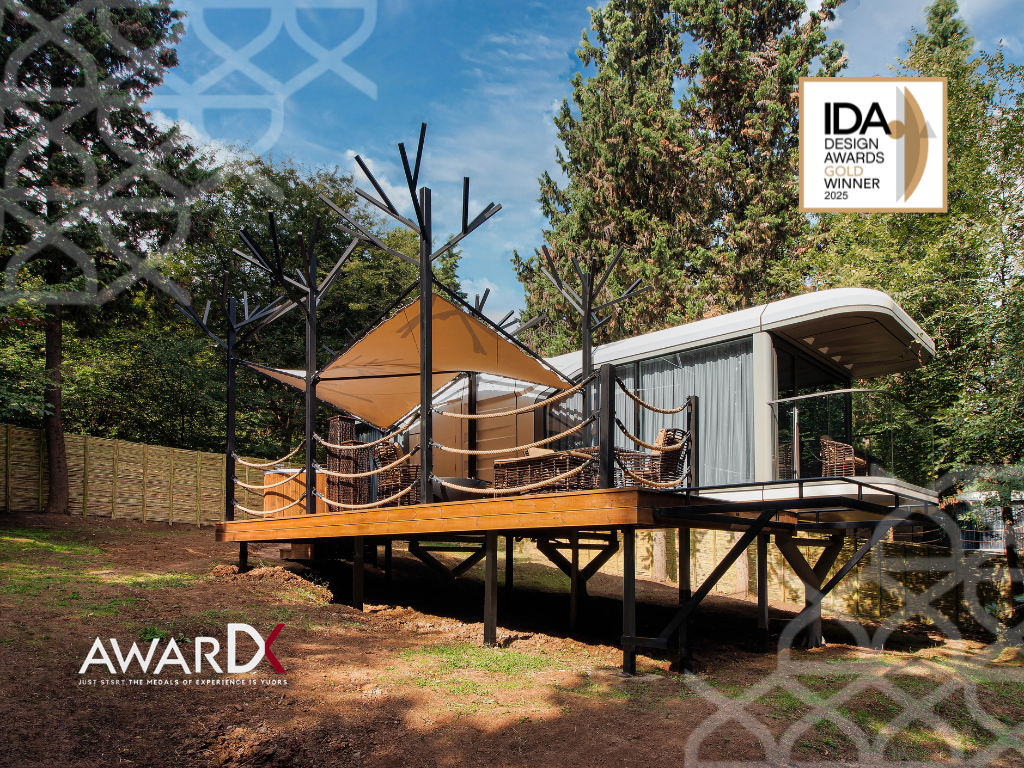
first light in the Hyrcanian canopy
Nestled in the ancient Hyrcanian (Hirkani) forest near Sari, Lalim Forest Resort reads like a quiet intervention: a cluster of prefabricated, suspended cabins that hover above the forest floor so the ecosystem below can breathe. The project is deliberately small-footprint — elevated decks, reed fences and trunk cladding make the resort feel grown from the site rather than dropped onto it.
A short narrative — why this place needed Lalim
Imagine waking inside a thin sheet of bark and stepping out onto a deck that looks down on a forest carpet of moss and fern. Peyman Kiani set out to offer that experience with minimal impact: give visitors a close, tactile encounter with the Hyrcanian woods while keeping the ground, hydrology and root systems undisturbed. The story is ecological hospitality — architecture that serves both people and place.
Designer mindset — contextual empathy and modular thinking
Kiani’s brief was not to create a landmark but to compose a system: lightweight modules that respect seasonal rhythms, local craft and the slow logic of older forests. He prioritised three overlapping aims — protect the forest floor, use local tactile materials, and enable repeatable prefabrication so the cabins could be built fast, affordably and with tight quality control. That mindset produces architecture that reads as calm, respectful and deeply site-specific.
Program & brief — what the resort must do
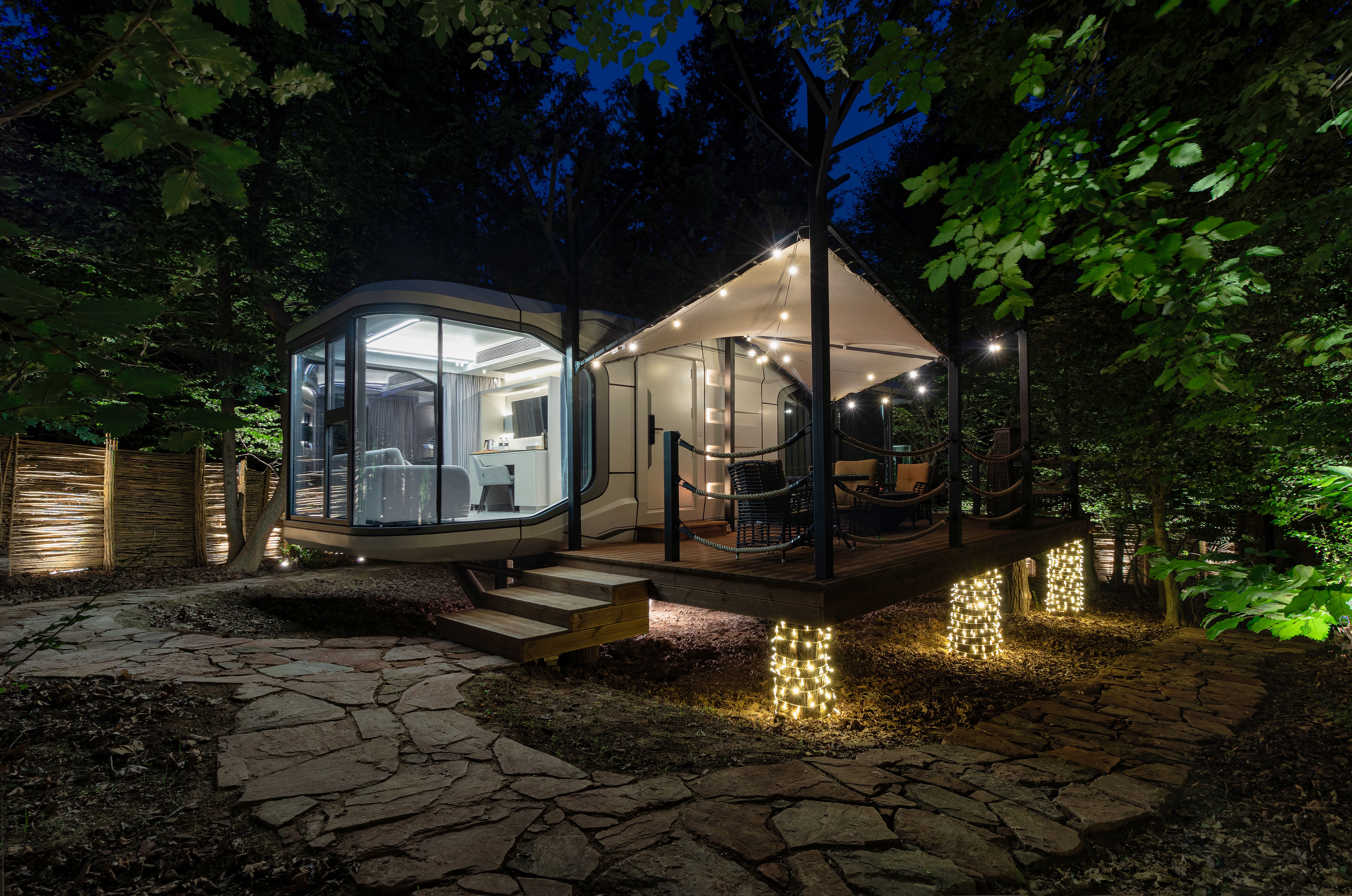
Lalim is a hospitality typology with tight constraints: guest comfort and privacy; minimal site damage; easy seasonal maintenance; and a characterful language that ties to local practice. The cabins are suspended on tree-like steel columns so the deck hovers above soil and roots; hemp-rope handrails and reed fences provide tactile, low-tech boundaries; and bark or trunk cladding visually connects the pods to surrounding trunks. The brief demanded a simple, repeatable module that could be multiplied across uneven terrain without heavy earthworks.
The concept move — prefabrication + suspension
The master stroke is technical and poetic at once: prefabricated modules lift the environmental cost of building while suspension preserves the forest floor. Prefab guarantees tight tolerances and short on-site time (good for weather and habitats); the suspended strategy reduces soil compaction and allows natural water flow and small-animal movement below decks. It’s a small technical choice with a large ecological payoff.

Materials & tactile strategy — local voice, global technique
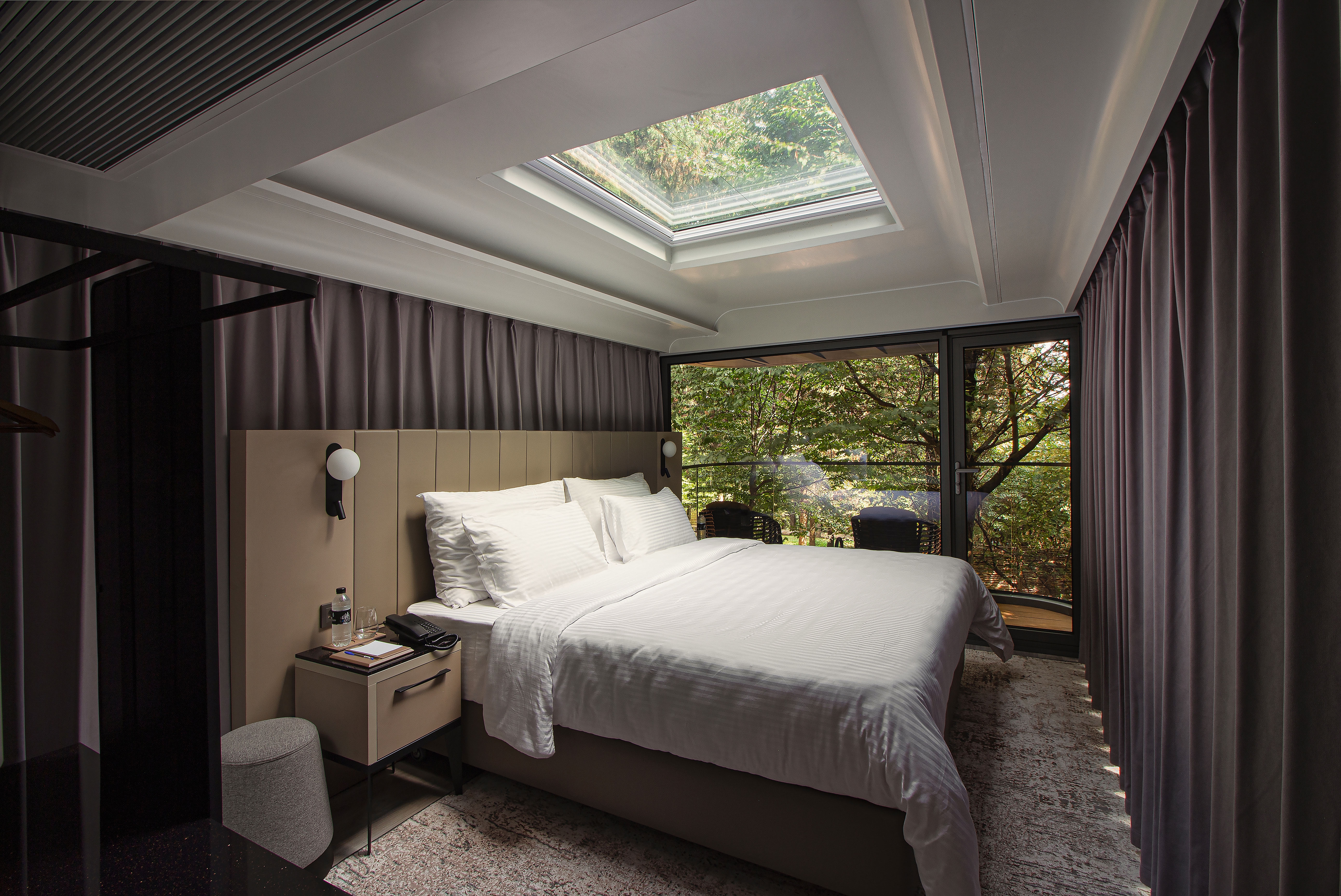
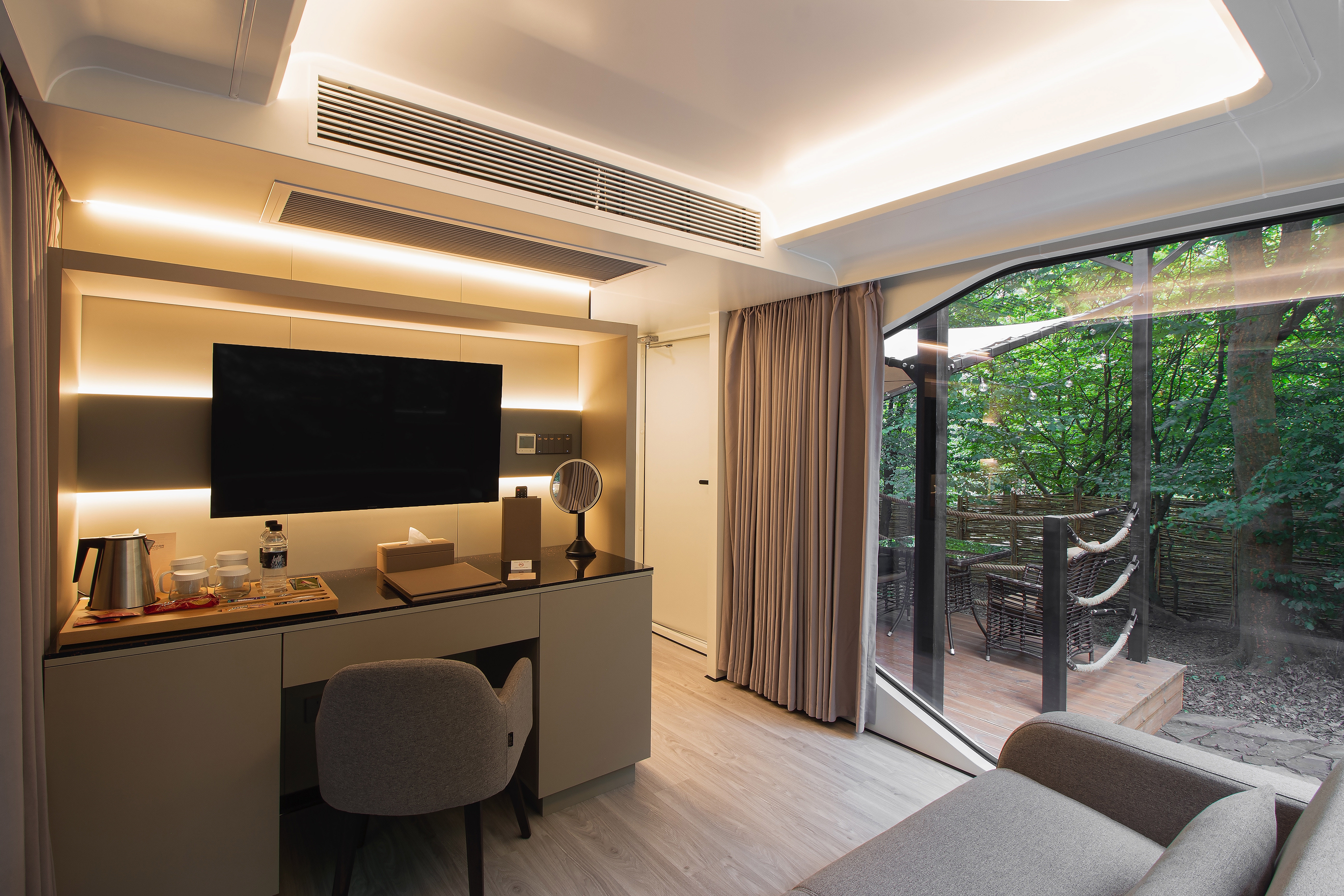
Material choices shape how Lalim feels in the forest. Kiani uses trunks and bark as cladding so facades patinate and age with the woodland. Decking and interior finishes reference local species and textures; reed fences and hemp ropes are locally readable, repairable and low-tech. Inside, finishes are restrained so the forest remains the visual star — warm timber floors, simple fittings, and large, operable windows frame the canopy. The material logic privileges repairability and local craft over disposable finishes.
Design development — from sketches to site trials
The project’s development loop looked like this: site analysis → modular sizing → shop-built prototypes → on-site mockups → refine attachment and drainage → user comfort trials. Full-scale mockups of the suspended deck tested vibration, deflection and egress, while mock cladding panels measured weathering and insect performance. Simple prototypes of reed fences and hemp handrails were trialled during winter rains to ensure longevity and sightline privacy. Realistic testing of the cabin footprint prevented common mistakes — too small a deck, drainage that channels water to roots, or cladding details that trap moisture.
Structure & technical details — tree-shaped columns and assemblies
Structurally, the cabins rely on a rational system: steel columns shaped like simplified trunks carry the deck loads to deep-set footings outside the most sensitive root zones. The cabins are fixed with bolted brackets that allow disassembly; service routes (water, waste) are kept above grade in flexible conduits. The platform sits on tuned vibration-damping pads to reduce resonance from wind or footsteps. These details allow the modules to be removed or replaced with minimal ground disturbance at end of life.
Sustainability & low-impact strategies
Lalim’s sustainability strategy is layered: reduce site impact (elevation and light touch foundations), choose durable local materials (cladding and decking that weather gracefully), and design for serviceability (replaceable panels, standardised components). Where possible the project specifies FSC or certified local timber, low-VOC finishes, and passive strategies for thermal comfort (cross-ventilation, shading, and insulating panels). The prefabrication process itself lowers waste and improves energy efficiency in manufacture.

Guest experience — choreography, privacy and immersion
The guest journey is carefully choreographed: arrival is on a discreet path screened by reeds; a short bridge leads to the elevated deck; the interior opens to framed views of trunks and sky. Privacy is handled by staggered offsets rather than fences, with reed screens used selectively near outdoor showers or sitting nooks. Flooring choices (bark or textured timber) ground visitors in the forest tactilely — the architecture asks guests to slow down and notice small things.
Construction, maintenance and lifecycle thinking
Because modules are shop-made, on-site assembly is fast and seasonally flexible — important in sensitive woodland environments. Maintenance is anticipated: cladding panels are replaceable, deck boards are reversible, and modular service panels give access to electrical and mechanical runs without ripping finishes. The design’s repair-first mindset encourages owners to maintain rather than replace — a crucial sustainability stance for hospitality hardware.
Awards & recognition — why juries notice Lalim
Lalim has been circulated in PKA feeds and project posts and has been taken seriously by juries that prize contextual, low-impact hospitality architecture. Its strengths—site sensitivity, prefabrication logic, and clear guest choreography—answer the contemporary brief for sustainable tourism that respects local ecologies and crafts. (See end links for project posts and firm profile.)
Lessons for practitioners — what Lalim teaches designers
- Treat the ground as a living system; design to avoid compacting it.
- Use prefabrication to improve quality and reduce on-site ecological damage.
- Make repairability visible: a building that can be disassembled is more sustainable.
- Let local materials and craft inform the aesthetic, not only the facade.
- Prototype in situ — full-scale mockups reveal interaction with weather and wildlife.
Official links for further reading:
https://www.instagram.com/p/DSSfiR3DRO0/      (Lalim Forest Resort project post)
https://www.instagram.com/p/DSSUYdXAVPu/      (project post mentioning IDA recognition)
https://www.instagram.com/peymankianiarchitects/ (Peyman Kiani Architects profile)
https://competition.adesignaward.com/gooddesigner.php?profile=275426 (Peyman Kiani A' Design profile)
https://luxuryproperties.ir/professionals/item/62/7/peyman-kiani (firm profile / portfolio)