

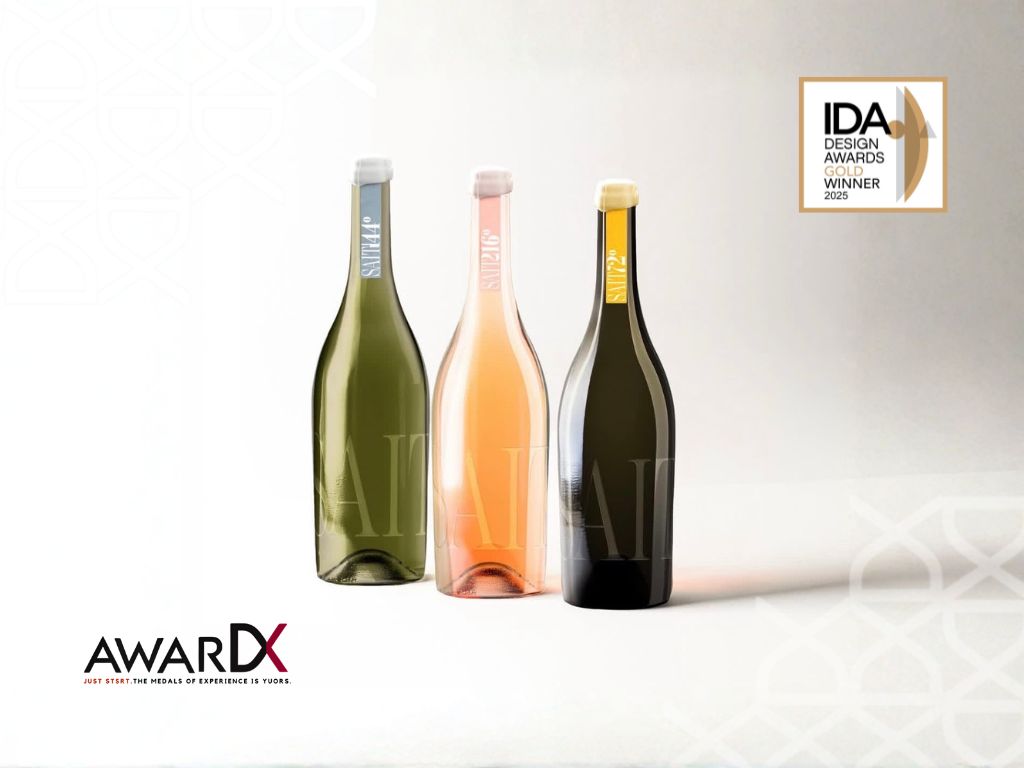
product snapshot
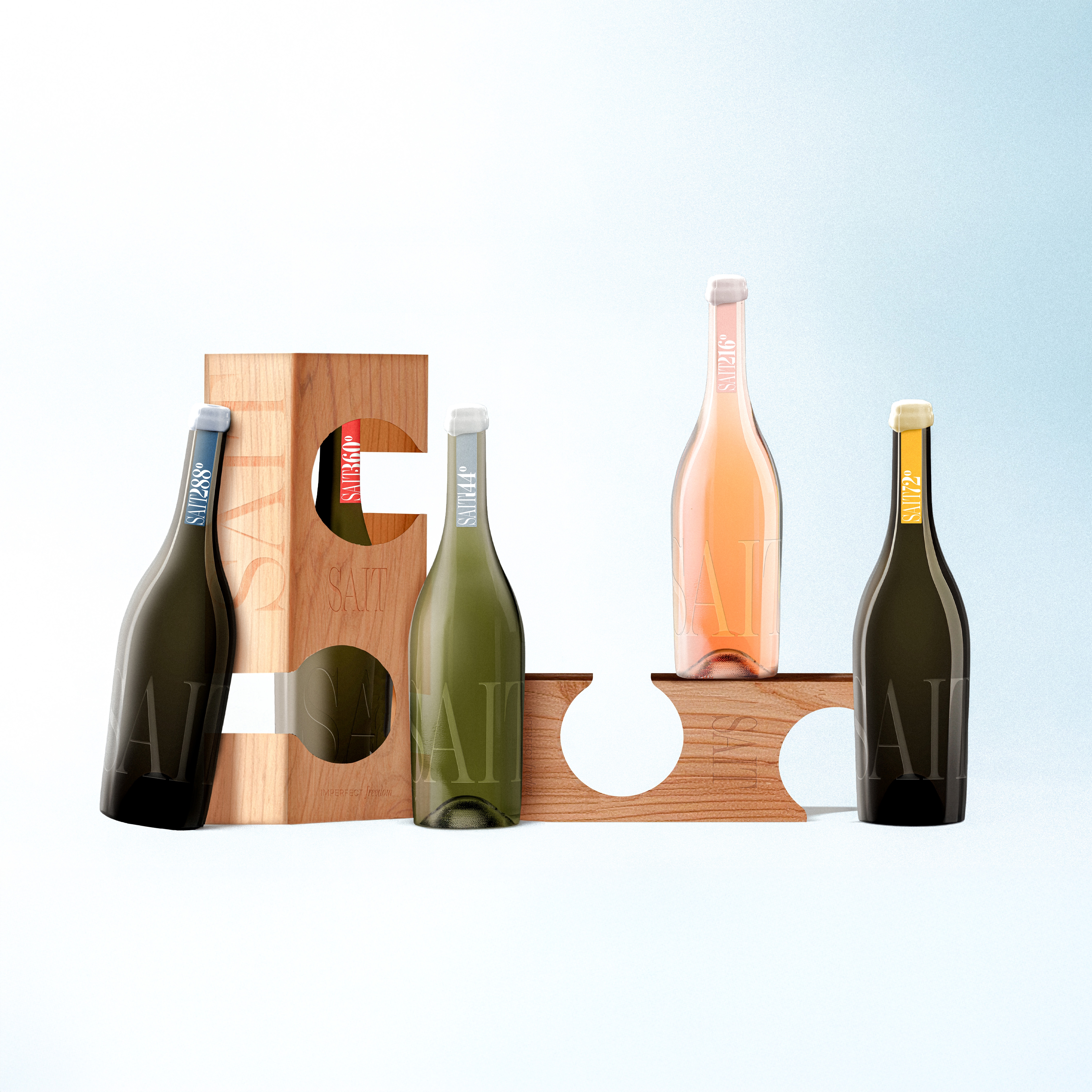
Sait is an organic-wine packaging system that treats shipping and unboxing as a single circular act. The core idea: ship bottles in a recycled wooden case that turns into a home-usable bottle rack when the customer opens it. The bottle and case are conceived as a collection and reuse system—bottles are designed to be refilled or returned, the case avoids single-use waste, and every element is sized and finished so the packaging becomes a functional object after delivery rather than landfill.
Shifta By Elisava — project context
This project grew inside a design-studio / academic setting where rapid prototyping and systems thinking collide with craft sensibilities. The studio context emphasised material honesty and social uptake: prototypes were tested for home reuse, for ease of flat-pack return, and for how people actually display and access wine in small kitchens. That applied research shaped decisions that go beyond visual identity—how something is handled, stored and re-entered into a circular loop matters as much as how it looks on the shelf.
Why this packaging matters — small details, big system wins
Most packaging is judged at the moment of sale. This project flips the attention: the most important moment is what happens after the box leaves the courier’s van. By designing for reuse and second life, the system reduces raw-material demand and extends the purchase’s lifecycle. The wooden case becomes a visible memory of the brand in the buyer’s home, increasing brand affinity while materially lowering single-use waste. That combination—useful second life + brand storytelling—is the commercial and ecological payoff.
Designer mindset — design as product + ritual
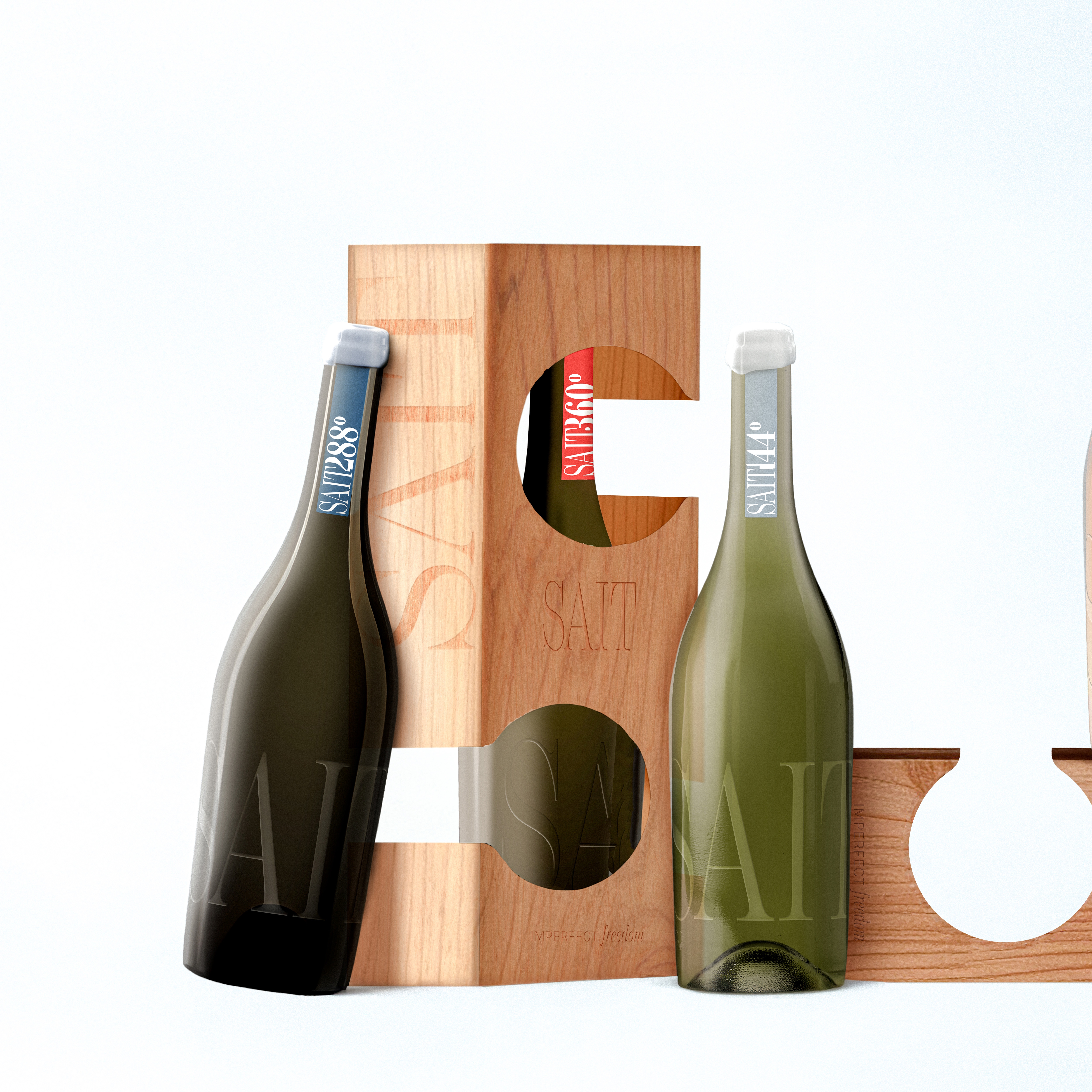
The design thinking here had two simultaneous aims: make something minimal and durable, and make the act of unpacking feel delightful and meaningful. The team treated the case not as disposable wrapper but as a domestic object: a rack that shows the spines of bottles, protects glass in transit, and is easy to fold for return. Decisions were rooted in human behaviour (where people actually put bottles, how they reuse boxes) and production realities (wood sourcing, joinery that survives many cycles). This mindset makes sustainability actionable rather than aspirational.
From brief to prototype — the development path
Problem mapping — tracked household bottle storage, shipping damages, and disposal behaviour to define measurable goals: reduce single-use material by X%, make a return path under Y steps, and ensure safe transit.
Material trials — tested reclaimed and recycled woods for strength, weight, and finish; tried different joinery to avoid glues that block recycling.
Flat-pack mockups — built CNC prototypes to validate nested parts and packing density for logistics.
User trials — gave early prototypes to households to see how the rack performed in real kitchens (stability, visual appeal, frequency of reuse).
Refinement — tuned dimensions so the rack both fits common countertop depths and stacks inside delivery pallets efficiently.
Production prep — specified finish treatments that preserve wood look but permit local recycling at end of life.
Material & manufacturing choices — circularity in practice

Key material moves were conservative and pragmatic. The case is made from recycled or reclaimed wood chosen for durability and low embodied energy; joints are mechanical (dovetail or slotted interlocks) rather than glued so disassembly is feasible. Bottles use a standardized neck and label format to simplify return/refill logistics and to enable refilling lines without extensive retooling. Finishes are water-based and low-VOC; where possible, fasteners are stainless or easily separable to simplify recycling streams.
Logistics & the reuse loop — making returns easy
A circular design is only good if people will actually perform the return. The team engineered the case to fold flat and fit prepaid return envelopes/containers, minimizing the friction of return. The brand provided simple incentives—discount on the next purchase or loyalty credits—for sending cases and empty bottles back. Logistics partners were considered early: the design’s packing dimensions were tuned to standard courier pallets to avoid costly special handling.
User experience — from unboxing to everyday use
Unboxing is a short narrative: the customer removes a stapled band, lifts the lid, slides out bottles, and then clicks the case into rack mode in three simple gestures. This ritual is fast but satisfying—part of the product’s emotional payoff. At home the rack is designed to display, not hide, bottles; it becomes a kitchen object that people keep on surfaces rather than stuffing into closets. That visible presence keeps the brand present, encourages reuse, and reframes packaging as a design asset.
Branding & community — building a young, conscious audience
The brand positioning aimed at a community that cares about craft and climate but still wants approachable, joyful wine experiences. The packaging’s second life (a mellow wooden rack) aligns with that brief: it signals care and small-scale craft without moralising. The launch strategy emphasized social formats—UGC of racks in readers’ kitchens, refill events, and local pop-ups that double as case-drop stations. Community incentives (discounts, collectible bottle art, workshop invites) deepen engagement and make returns social, not just logistical.
Design lessons — practical takeaways
Design for the second life first—if the secondary use is compelling, reuse will happen.
Prototype with the supply chain in mind—logistics constrains design more than aesthetics.
Make disassembly easy—mechanical joints beat glued assemblies for circularity.
Measure what matters—track returns and reuse cycles, not just intentions.
Tie circularity to emotional value—people keep objects that delight them.