


A micro-world made of tiles
Cafe Hana is an exercise in compression and craft: a 12.5-square-metre café interior where every surface, seam and shadow is orchestrated through a single modular element — a 2.5 x 2.5 cm square tile. Ghazal Soleymani turned the constraint of a tiny footprint into an opportunity for dense pattern, tactility and choreography. The result reads like a jewel-box café: intimate, highly textured and unexpectedly generous in spatial richness. IDA recognised the project with a Bronze in Commercial Interior Design (Cafeteria / Office Canteen), an apt reward for a project that makes restraint feel abundant.
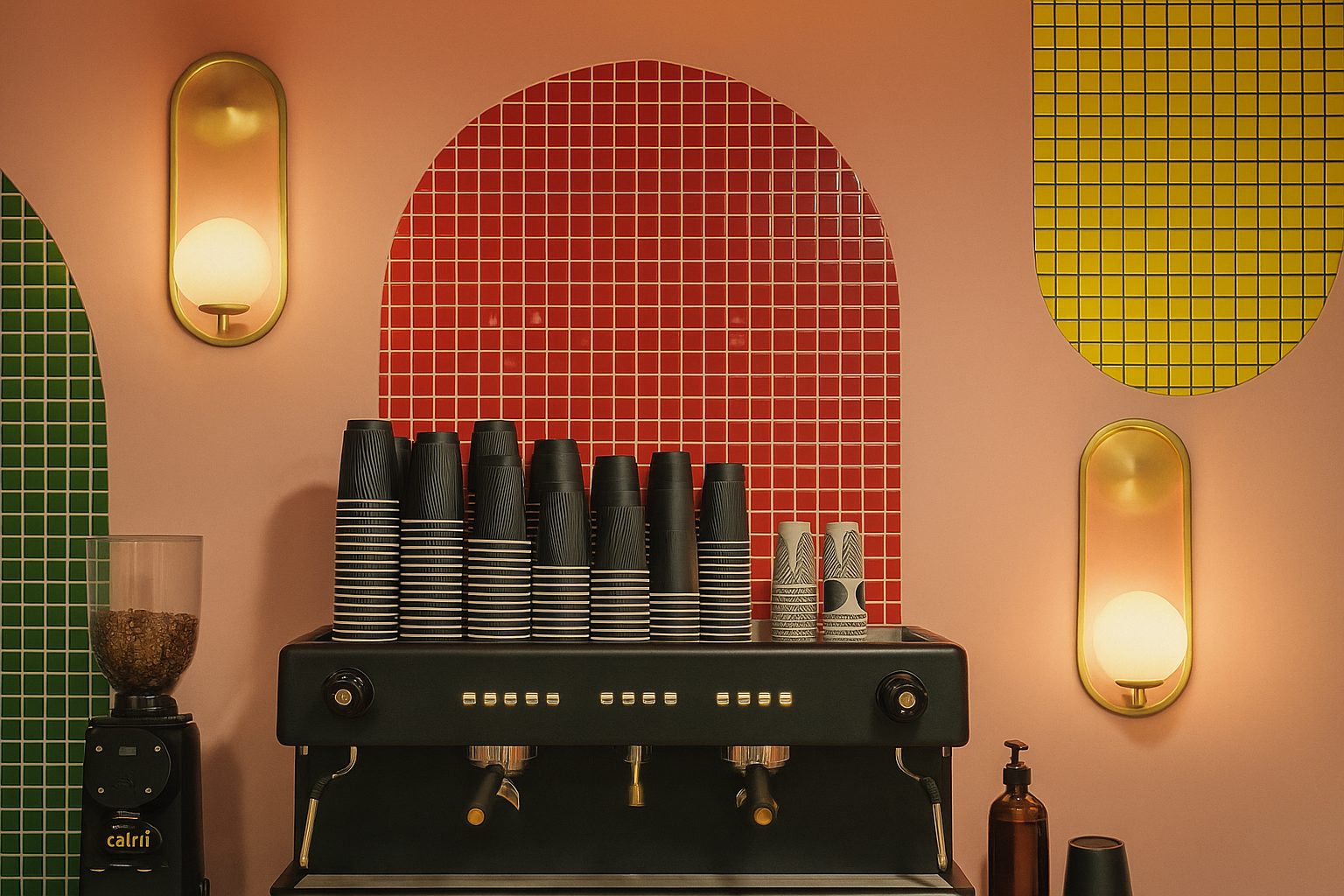
Project snapshot — what Cafe Hana is
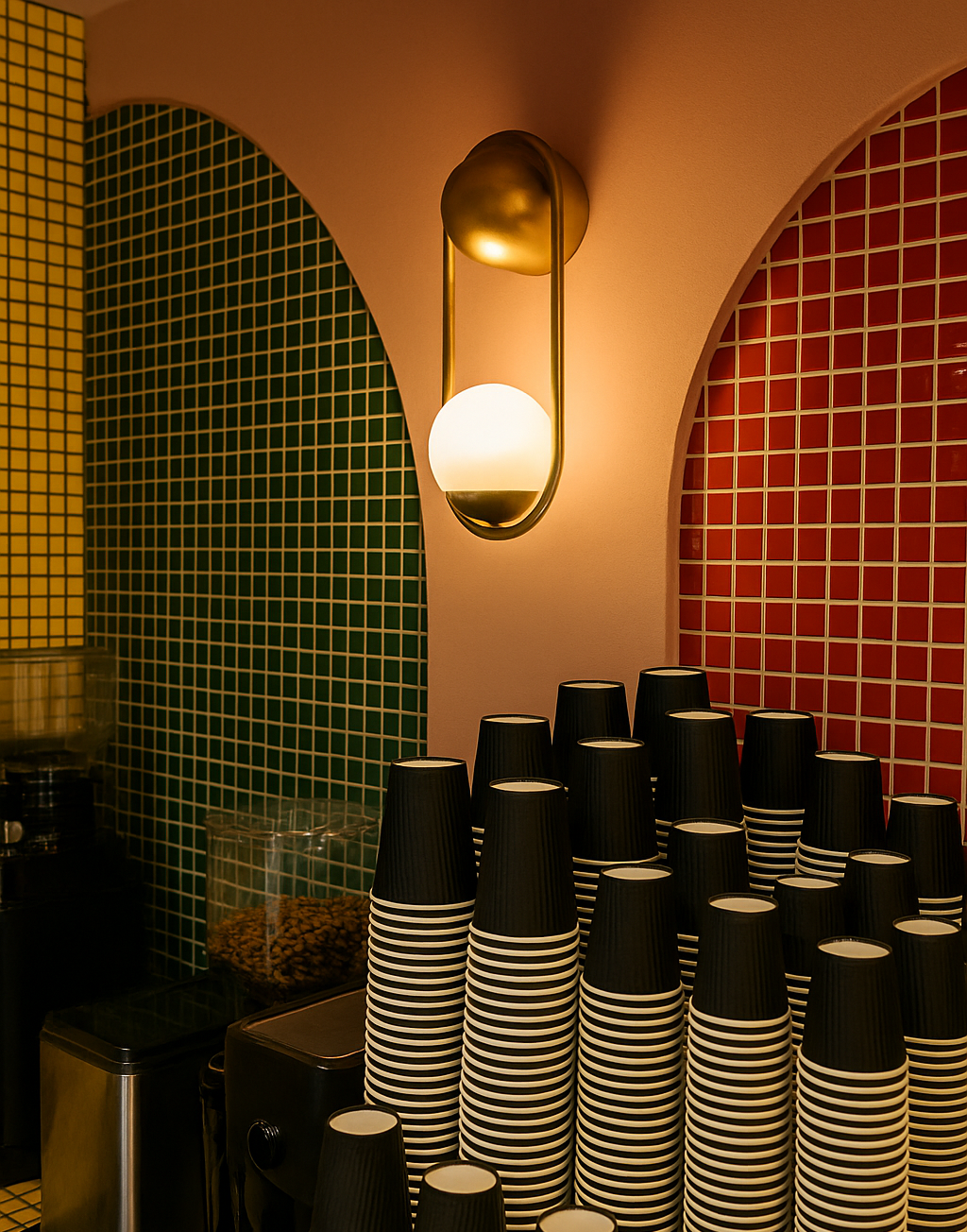
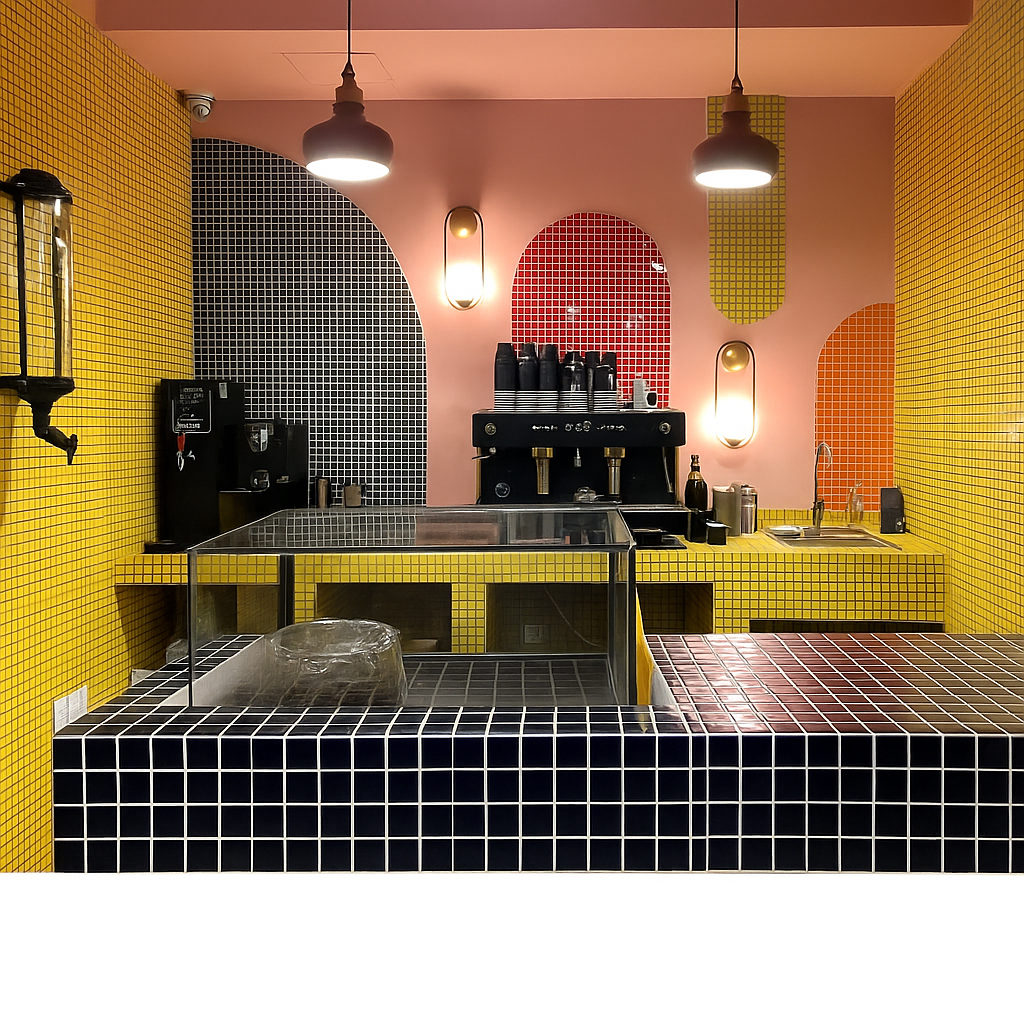
Cafe Hana is a complete interior resolved in small ceramic tiles. The entire 12.5 m² is treated as a continuous skin: floor, walls and selected furniture surfaces are tiled in a considered palette of colors. In the café’s middle zone a U-shaped ceramic element—scaled and patterned—serves as both a focal sculptural object and a functional piece (counter, display, or seating back). The small tile size enables fluid curvature and finely graduated patterning that a larger module could not achieve, and gives the interior a handcrafted, mosaic-like presence.
Designer mindset — rules, repetition and tactility
Soleymani treated the tile as a grammar more than a finish. The creative brief focused on three drivers: economy of footprint, sensory richness and an architecture of detail. The 2.5 cm tile becomes a pixel: by varying color, orientation and grout depth, she composes micro-patterns that read as texture from close range and as larger fields from a distance. The U-shaped ceramic element is both a gesture of hospitality and a demonstration of how modular repetition can generate formal complexity without heavy fabrication.
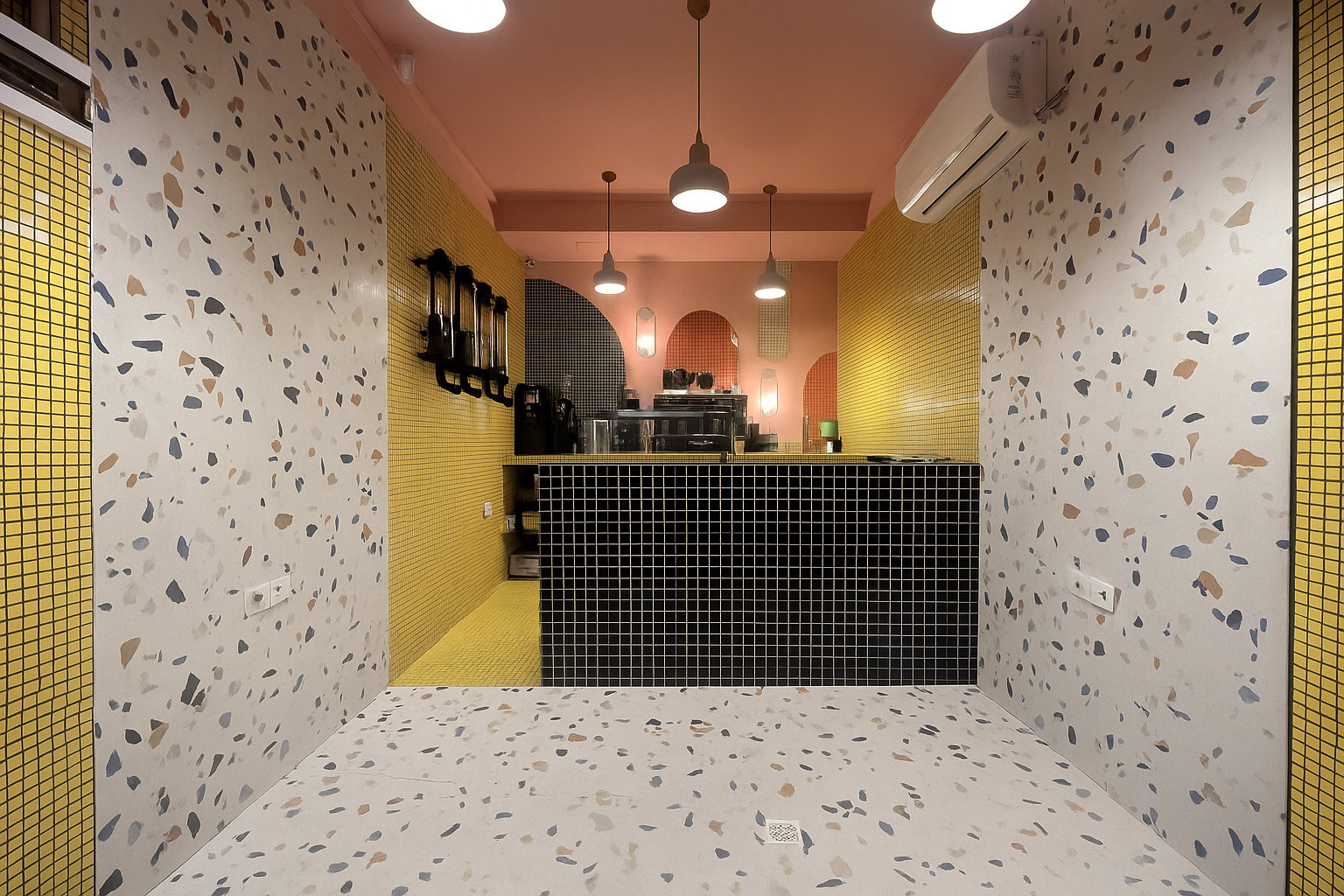
Why the tile move matters — scale as design language
Small tiles change everything. They let the designer articulate curves, produce gradations of tone, and create tactile surfaces that are comfortable to touch and resilient to use. In a tight plan, small-module tiling avoids the awkward visible seams and patching that plague larger panels; it also allows the designer to “paint” the room with patterns that guide movement and frame activities. Cafe Hana uses tile not as a sterile cladding but as a drawing tool that shapes how people move, stand and order.
Concept development — from palette to U-shape
The development likely progressed from color studies and pattern tests to full-scale mockups. Early work would map circulation (entrance, queue, service counter, standing/small seating) and then overlay potential tile patterns that emphasize or deflect movement. The U-shaped ceramic sculpture at the center is a tactical decision: it anchors the plan, creates a visual destination in a tiny room, and provides a multi-purpose object that can host service, display and seating. By keeping the primary material the same across elements, Soleymani avoids visual fragmentation in the small space.
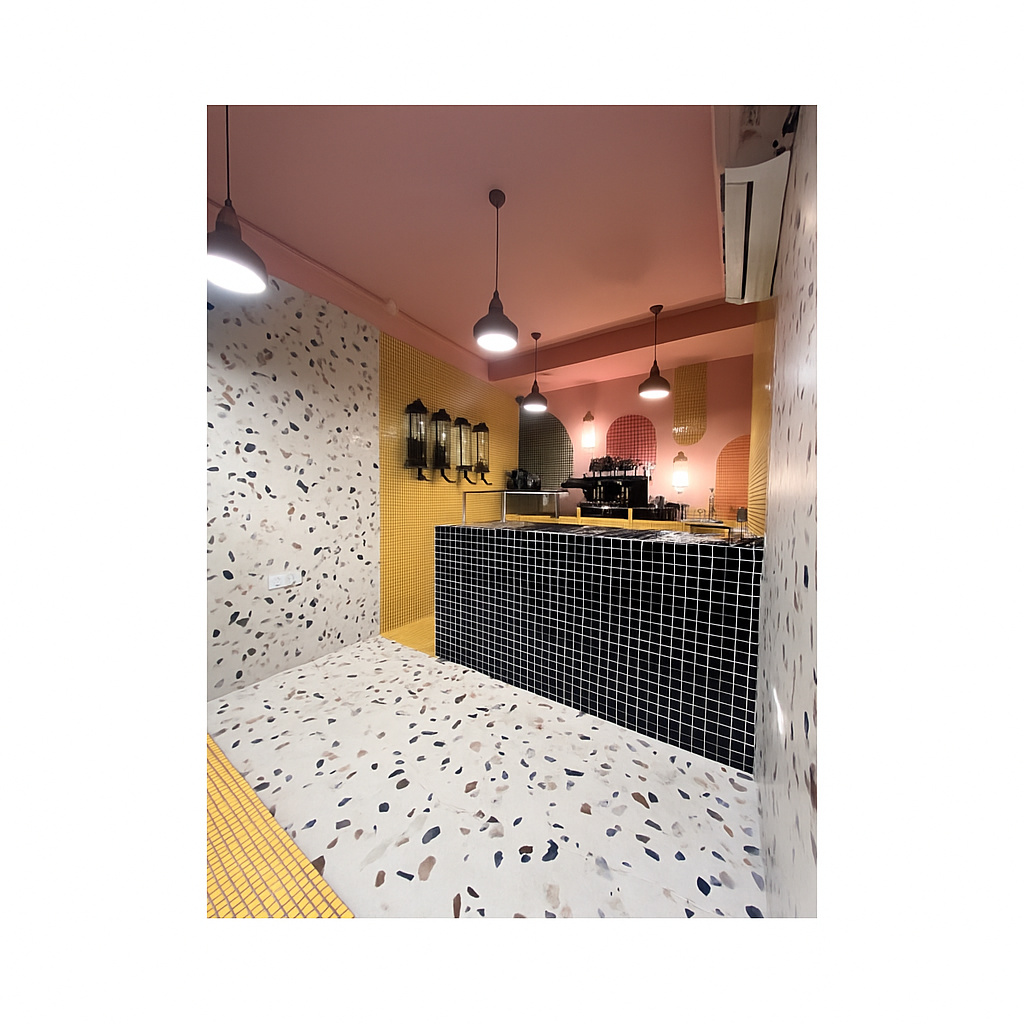
Material and detailing — tiles, grout and the art of joints
Small tiles demand strict detailing. Choices include tile thickness, edge treatment (rectified or soft), grout color and sealant strategy. The grout becomes a critical design variable: a darker grout will emphasise the grid and pixel quality; a matched grout will let color fields read as continuous planes. Attention to substrate preparation, movement joints and waterproofing behind the tile is essential—especially where vertical and horizontal planes meet or where the U-shaped ceramic form interfaces with service equipment. The tactile result in Cafe Hana depends on rigorous tile tolerances and careful installation sequencing.
Construction challenges — precision in a compressed budget
Tile installers need discipline: a 2.5 cm module multiplies placement operations and magnifies anyone’s small misalignment. Key construction strategies include: shop-cutting repetitive components, using temporary jigs to hold spacing while adhesive cures, and dry-lay mockups to verify pattern before permanent fixing. In a tight commercial fit-out, coordination with MEP and furnishings is also critical—there’s little tolerance for last-minute penetration or chase cutting once the tile field is committed.
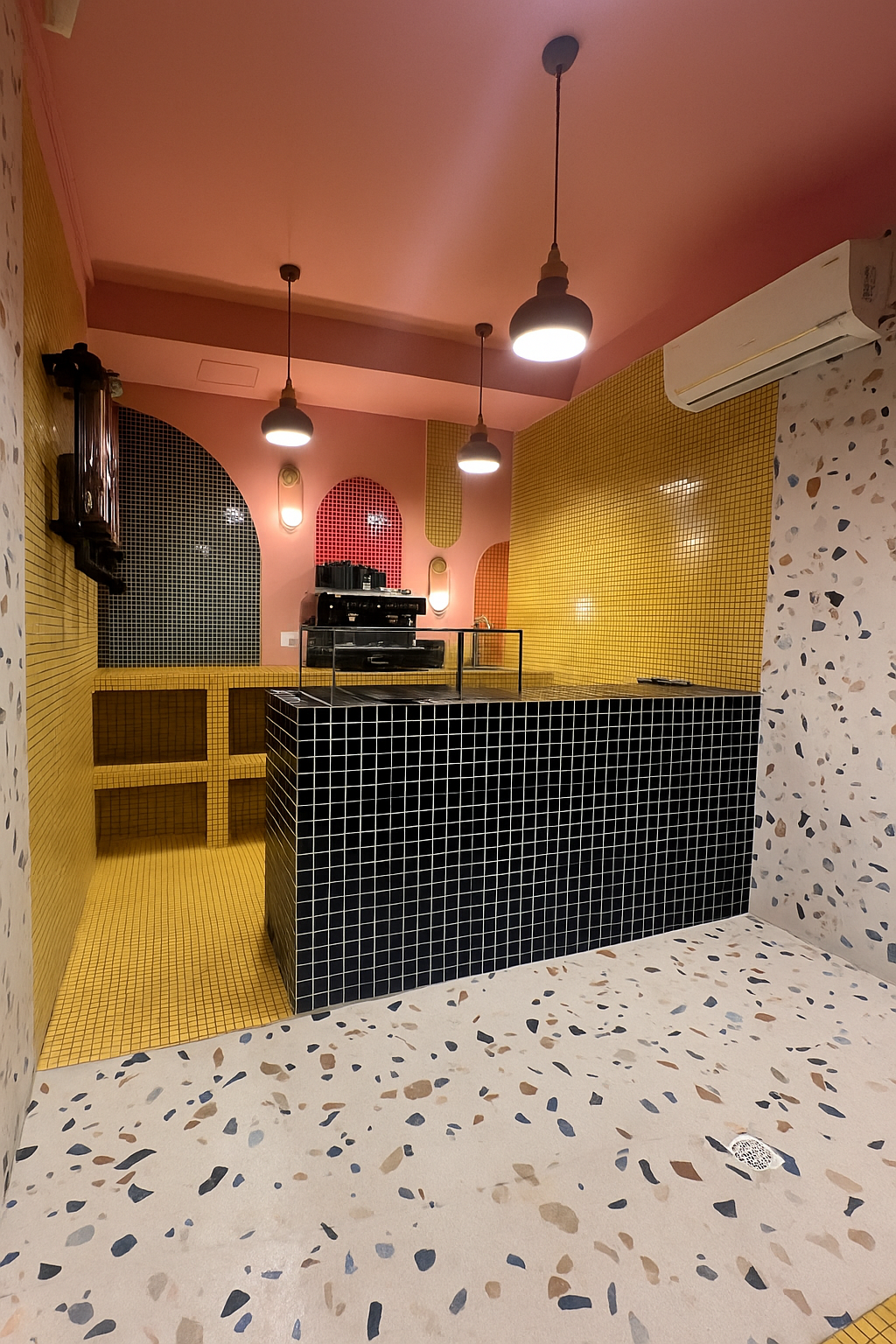
Lighting and atmosphere — making small surfaces sing
Lighting design is crucial in a tiled micro-interior. Surface texture responds differently under grazing light vs. diffuse ambient light. Soleymani likely used a combination of soft, diffused ambient illumination to keep the room legible and localized task or accent lights to bring out the U-shaped ceramic feature. Warm color temperatures enhance the tactile warmth of ceramic; subtle grazing from angled wall washers reveals joint depth and the tactility of the pixel field. Lighting cues can also slow or accelerate perceived scale—an important tool in a tiny space.
Program & ergonomics — designing for real café routines
In 12.5 m², program clarity is everything: a clear service path, compact back-of-house essentials and quick transitions for patrons. The U-shaped form helps by consolidating service functions and creating an invasion-resistant perimeter for staff. Standing areas, two-person counters or foldable seating reduce clutter while tile surfaces offer durable finishes for spills and frequent cleaning. Choosing tile also makes sanitation straightforward—another practical advantage for cafes.
Acoustics & comfort — softening a hard shell
An all-tile interior risks harsh acoustics. To keep the ambience pleasant, soft furnishings, textiles, or acoustic panels embedded within joinery are usual interventions. Soleymani may have balanced the ceramic’s reflective surfaces with upholstered cushions on seating, a small fabric wall panel behind the service counter, or a rug at standing points. These interventions retain the visual continuity of tile while improving conversation comfort.
Sustainability & maintenance — longevity as a design decision
Durability is a sustainability win in a café: long-lasting tile, repairable grout and replaceable panel sections reduce waste from refits. Selecting low-energy ceramic manufacture, locally sourced tiles, or recycled clay content enhances environmental performance. Maintenance is practical: regular grout sealing schedules, stain-resistant finishes and modular tile replacement strategies keep the interior looking fresh without full renovations.
Presentation & storytelling — how to show Cafe Hana
For editorial or a portfolio feature, structure the story around sequence: facade → entrance threshold → the U-shaped core → detail shots (tile joints, grout texture, lighting grazing). Include a plan diagram showing circulation and a small construction note about tile module and installation strategy. Close with a short designer statement about how small modules can create generous experience—this helps readers see the idea beyond novelty.
Awards & impact — what the IDA Bronze recognises
IDA’s Bronze for Commercial Interior Design recognises both concept and execution. In Cafe Hana the jury likely appreciated how a tight program was resolved elegantly through material discipline and a confident sculptural move (the U-shaped ceramic). Awards help the project reach international audiences and validate the commercial viability of using craft-driven detailing in compact hospitality projects.
Lessons for designers — practical takeaways
Use the module as syntax: pick a single unit (tile) and learn its expressive vocabulary.
Prototype at real scale: build full-size tile test walls to verify sightlines and tactile feel.
Detail the joints: grout color and depth change the design’s language profoundly.
Plan MEP early: small rooms have zero tolerances for late changes.
Mix hard and soft: balance tiled resilience with acoustic and tactile comfort.
Design for repair: make tile fields demountable in panels for easy replacement.
Official links for further reading:
https://www.idesignawards.com/winners/zoom.php?eid=9-61444-25