


a story of sand, shadow and a jewel
In a world of scorching dunes and whispered legends, Dune reads like a small reliquary: a necklace that carries narrative, motion and cultural memory around the neck. Elaheh Babaei designed it as a wearable echo of Frank Herbert’s Arrakis — spiraling forms that mimic sandworms, stepped geometries that nod to Yazd’s Jameh Mosque minaret, and dark stones that carry a story about scarcity and survival. The piece is at once a literal tribute and a symbolic object: jewelry that insists on being read as costume, architecture and myth simultaneously.
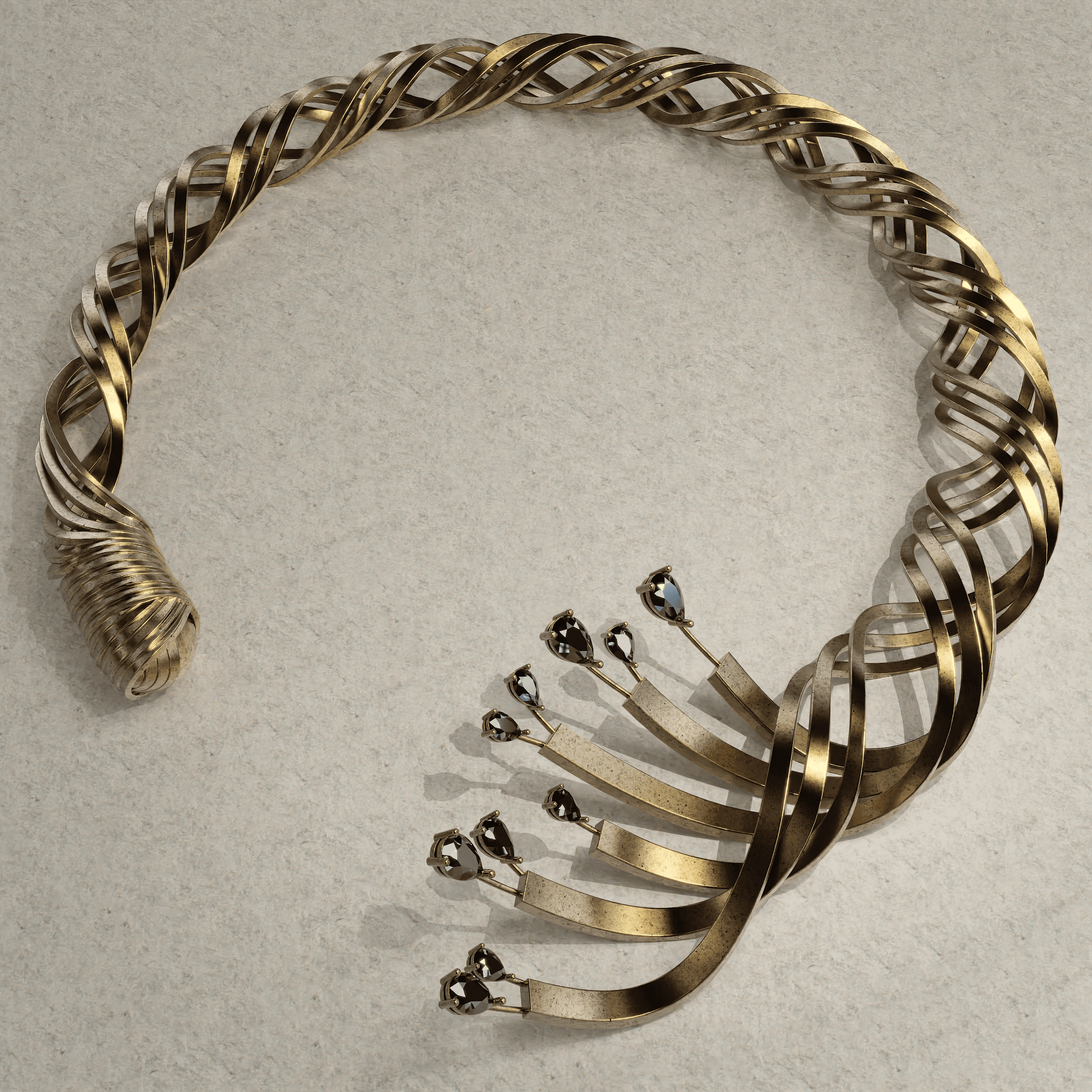
Product snapshot — what Dune is
Dune is a sculptural necklace built around a spring-like mechanism that gives the piece a subtle, living movement — a pulse that references the subterranean motion of the sandworm. The design uses black diamonds as a conceptual marker (water’s rarity in the story-world) and brutalist, stepped geometry to translate architectural memory into jewelry scale. It balances weight, articulation and finish so the movement feels deliberate rather than fussy: a mechanical heartbeat inside a precious object. The work won recognition in the International Design Awards.
Designer mindset — translating literature, architecture and ritual
Elaheh Babaei’s creative frame for Dune begins in three sources: literature (the Dune mythos), vernacular architecture (the stepped minaret geometry from Yazd) and the craft logic of jewellery making. Her approach is to let each reference remain legible — not to paste motifs onto a form, but to distill rules: spiral curvature that yields a comfortable profile; repeated steps that create a rhythm when read from different angles; and a movement system sized for human-scale comfort. This rule-driven translation produces work that feels inevitable: if you understand the references, the form reads as an honest offspring of them.
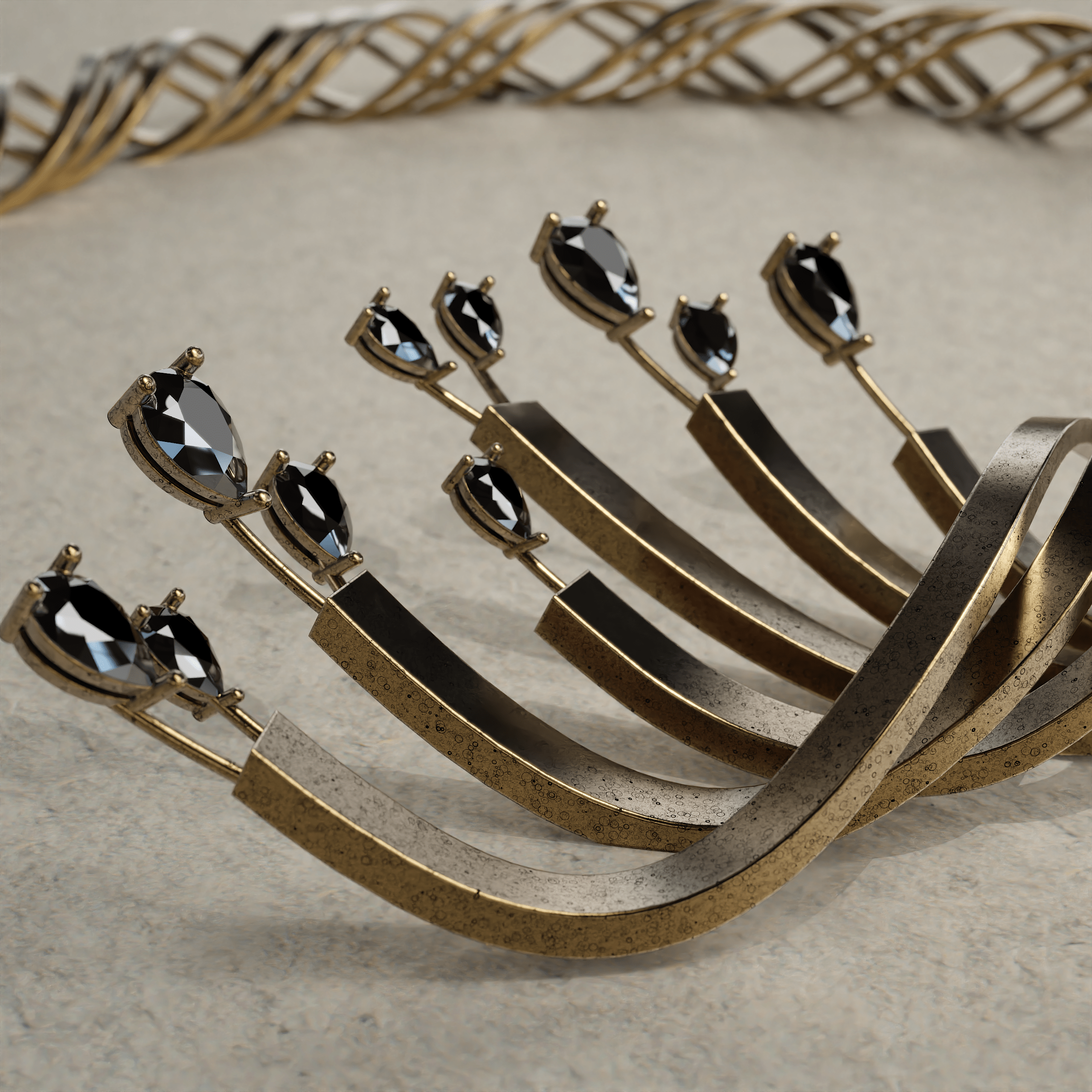
Why the idea matters — cultural depth in a small object
Jewellery often carries meanings that outsize its scale; Dune uses that capacity deliberately. By combining literary symbolism (sandworms, water-as-precious) with regional architectural cues and modern mechanical thinking, Babaei makes a piece that functions across audiences: collectors attracted by narrative; curators interested in cross-disciplinary references; and wearers who want a jewel that performs both visually and kinetically. The IDA recognition underlines that juries saw both concept and execution as rigorous.
From spark to sketch — the early concept phase
Dune’s first sketches likely began as gesture drawings — spirals, stepped profiles and small mechanisms to create motion. Babaei’s practice (which pairs architectural thinking with jewellery craft) turns those gestures into constraints: how big can a spring be before it becomes uncomfortable? How much movement reads as life and not as noise? Early ideation focused on proportions that move well with a human torso and a silhouette that reads at a glance even when the mechanism is at rest.
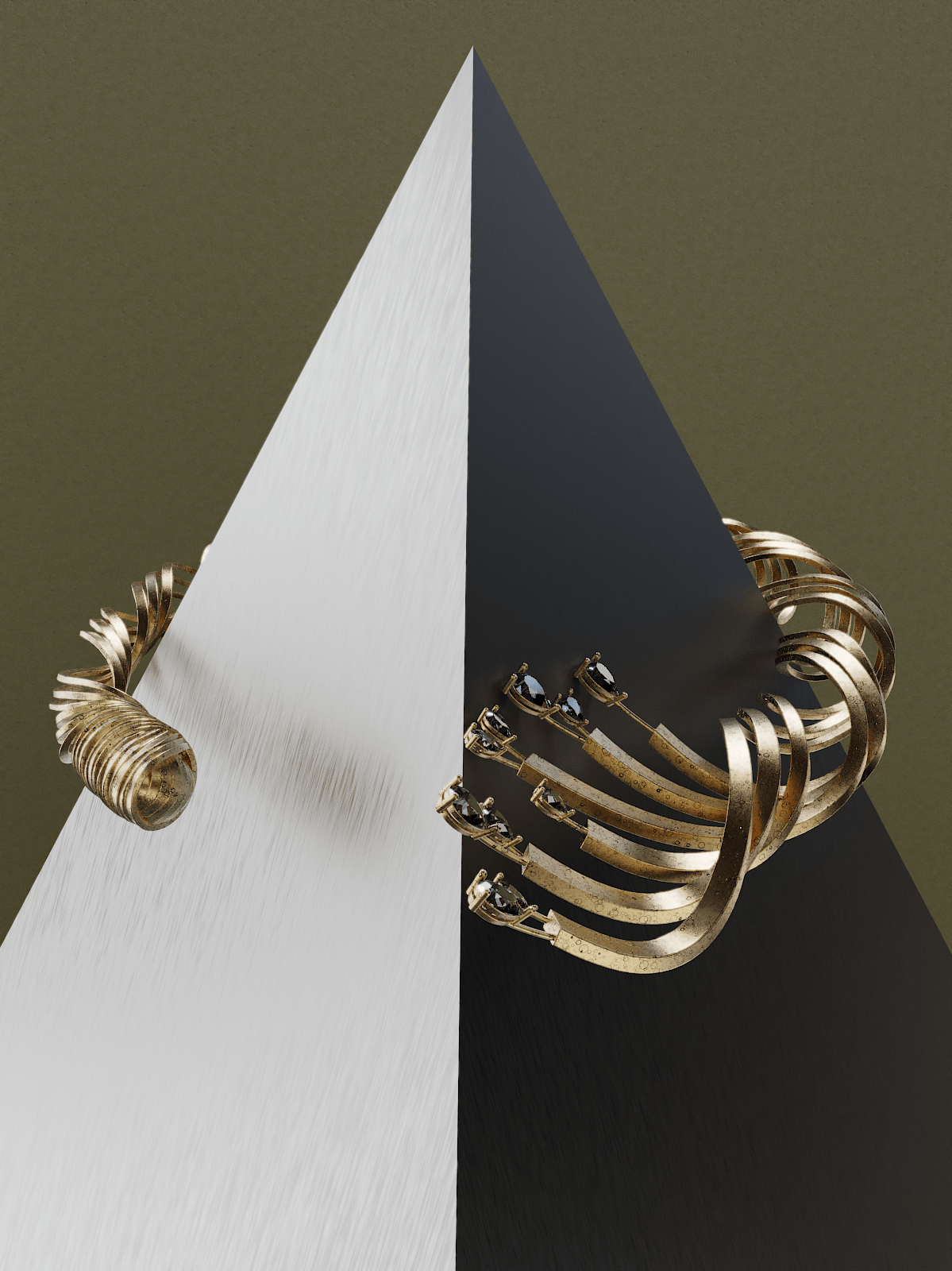
Material choices — black diamonds, metals and surface language
Material decisions are conceptual and technical. Black diamonds are chosen as symbolic stones — they signal scarcity and visual gravity — while metal choices (likely a high-karat gold or a durable alloy) provide the structural language for steps and mechanical parts. Surface finishing becomes crucial: raw, brutalist planes need refined edges so they don’t nick skin; the spring must be finished to avoid corrosion and be comfortable against clothing. These materials together make Dune both durable and narratively legible. (Designer bio and award details list Dune as a notable work by Elaheh Babaei.)
Engineering the movement — designing the heartbeat
A spring mechanism in fine jewellery raises many technical questions: fatigue life under repeated motion, backlash that could rattle, safety so nothing catches on hair or fabric, and how to hide mechanical joins while keeping them serviceable. Babaei’s solution balances visible stepped geometry with concealed pivots and a calibrated spring stiffness so the necklace gently breathes with the wearer’s movement. Prototyping would have included multiples of the spring and joint assemblies, tested for cycles of motion and wear tests to ensure longevity.
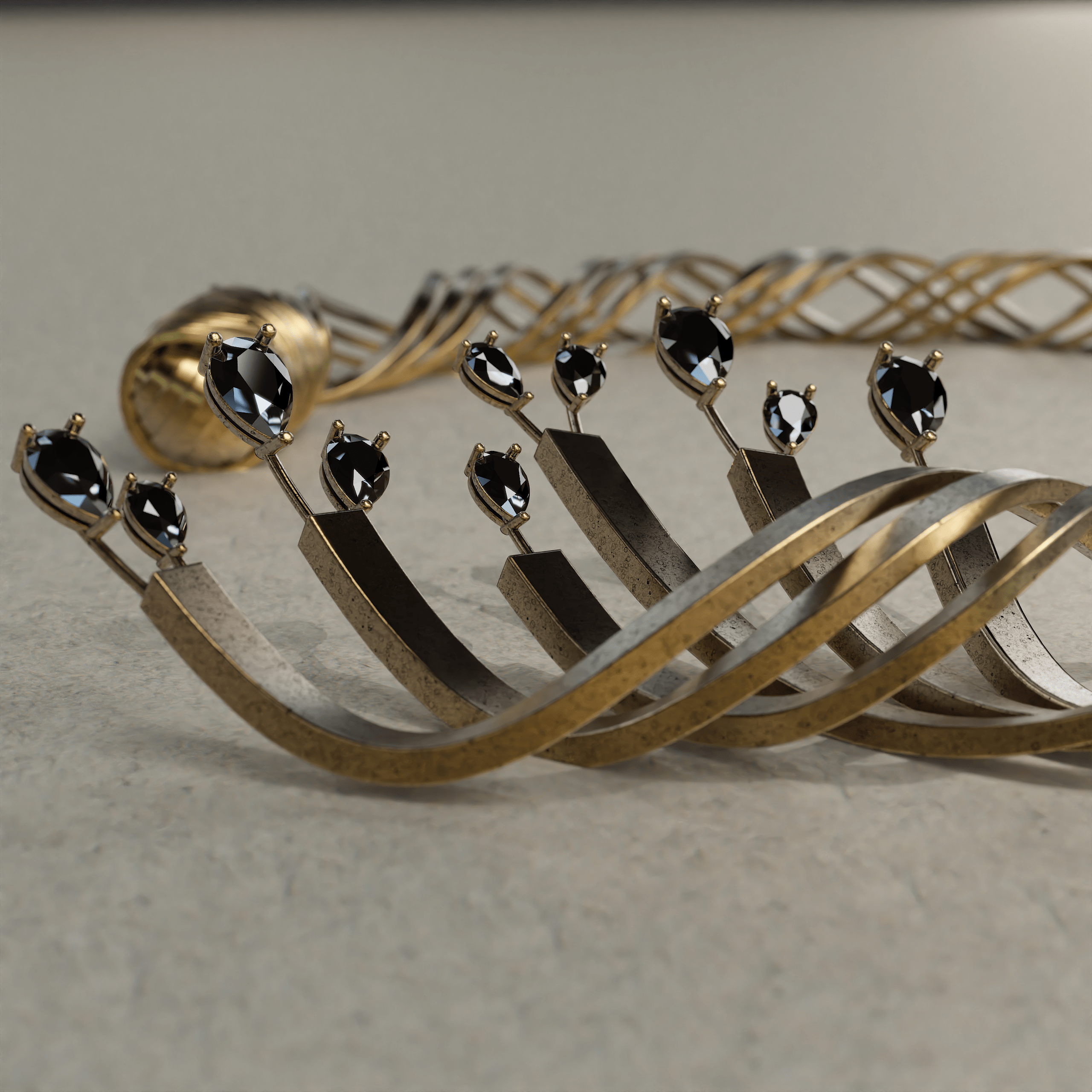
Presentation and storytelling — how Dune is shown
To present Dune effectively: use a hero image that pairs the piece with a textured desert-like backdrop; detail shots that show the stepped terraces and black-diamond accents; a short motion clip that demonstrates the spring’s pulse; and a process strip (sketch → prototype → metal master → finished piece). That narrative arc gives readers context for both the idea and the craft that made it real.
Awards & recognition — IDA and reputation
Dune is listed among the International Design Awards winners, a formal recognition that amplifies Babaei’s profile and validates the project’s cross-disciplinary ambition. The award entry and designer profile are public on the IDA winners pages, which document the project and its lead designer credentials. This institutional acknowledgement helps the piece reach curators, galleries and collectors who use awards as a vetting signal.
Design lessons — what makers can learn from Dune
Let references be rules: transform literary or architectural inspiration into constructive constraints.
Prototype motion early: moving parts change everything at micro scale.
Balance narrative and ergonomics: story matters, but the human body is the final judge.
Make repair visible: design for service increases longevity and collector confidence.
Use awards strategically: recognition helps translate cultural depth into market interest.