

A myth folded into metal
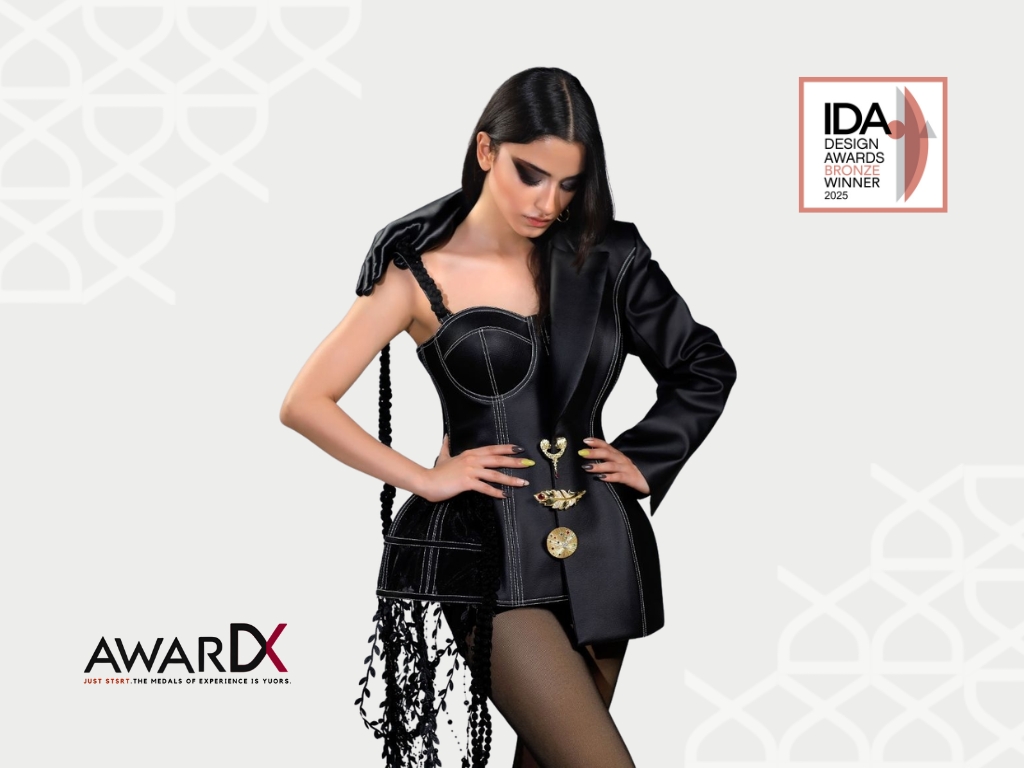
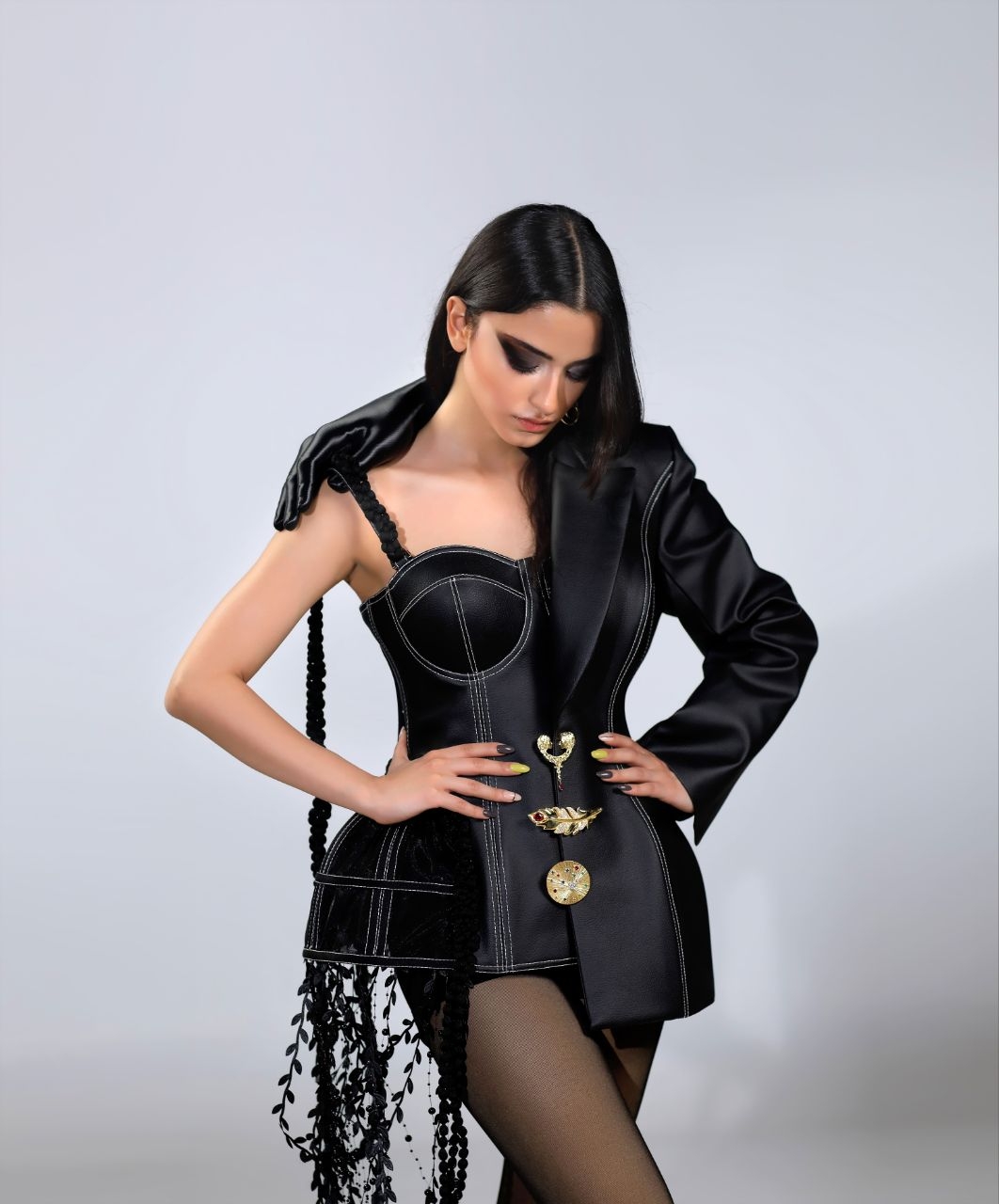
Beloved’s Hair (Gisouye Yar) is a set of three brooches that wears a story: not an illustration, but a condensed narrative sequence drawn from the great Persian epic. Each piece functions as a tiny stage where mythic action, color symbolism and precise craft meet. The suite won Bronze in Accessories at the International Design Awards and reads as wearable storytelling—an object that invites close looking and slow explanation.
Meet the maker
Rosetta Hosseinipour designed the series under the studio label Rosetta Jewellery. Her practice mixes cultural research with meticulous metalwork: she treats narrative sources as functional constraints (what must be shown) and as formal rules (how to show it without losing wearability).
The narrative engine — Shahnameh as design brief
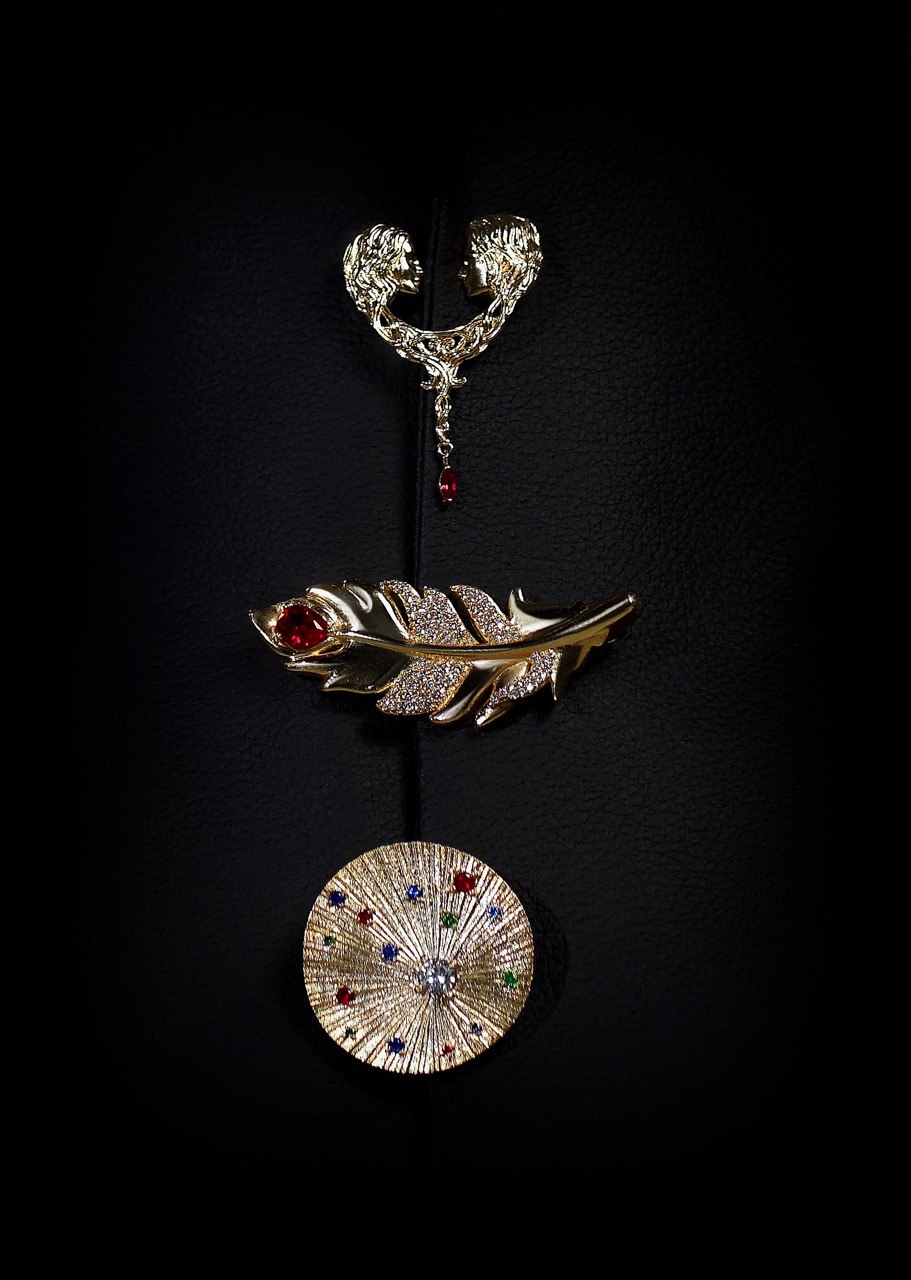
The three brooches map key moments from the tale of Rudabeh and Zal and the birth of Rostam, taking compositional cues from the Shahnameh rather than literal scenes. Shahnameh provides motifs and emotional beats—the kiss, the burnt feather, the prodigy’s dawn—that were translated into color, volume and movement. The result is symbolic rather than illustrative: red, green and blue shards that combine visually and conceptually to form a “white” final note, where a round white stone signifies Rostam’s arrival.
Why jewelry is the right vessel
Jewelry can carry layered meaning while remaining intimate. A brooch sits close to the face and heart, making it an ideal medium for a tale about lineage, sacrifice and destiny. By designing three interrelated pins rather than a single tableau, the designer gives the wearer options: wear one to suggest a chapter, or all three to carry the full narrative arc.
Concept → form — translating story into signs
The design process began with narrative decomposition: identify the minimum formal elements that can communicate each moment at glance distance. For example:
The reunion/kiss becomes an elongated marquise stone set flush into silver planes—its red surface reads as a punctuation mark.
The Simurgh feather burned is implied by a feather-like plate with controlled oxidation and a textured finish that suggests scorching.
Rostam’s birth is resolved as a stepped field of primary colors that converges on a central white round stone—an abstracted chromatic allegory of synthesis.
These minimal signs respect jewellery scale and keep readability under ambient light.
Materials & symbolic palette
Materials were chosen for both symbolism and technical behaviour:
Sterling silver for the body (durable, receptive to surface finishes).
Gold plating to emphasize accents and to create warm highlights against oxidised silver—a classical contrast that reads well even in small objects.
Red marquise gem (glass, garnet or similarly saturated stone) as the kiss signifier—selected for saturation and faceting that catch sidelight.
Matte/white round stone to act as the narrative “summit” (Rostam) whose neutrality resolves the triadic color symbolism.
Finishing choices—micro-etching, controlled patina, and soft brushing—help the brooches read as tactile artifacts rather than shiny trinkets.
Technical making — bronze-scale craftsmanship in silver
Producing brooches with narrative fidelity requires micro-level rigor. Typical steps in the workshop included:
Sketch & micro-modeling: quick ink sketches → scaled paper/card maquettes to test silhouette and overlap.
CAD and 3D-print masters: translate sketches into fine-resolution prints to confirm fit and proportion.
Lost-wax or cut-silver masters: depending on form complexity, either wax casting or hand-formed silver plates were used.
Surface work & plating: selective gold plating applied via electroplating masks; patina applied with liver of sulfur or controlled oxidizers to build contrast.
Stone setting & pin engineering: low-profile ratchet pins and safety catches designed for comfort and secure wear; settings were tension-tested to keep stones stable without bulky bezels.
Finishing & QA: edge deburring, polish gradients, and wear testing to ensure no abrasion against clothing or skin.
This combination of processes keeps the pieces light, robust and safe for everyday wear.
Symbolism and color theory — red, green, blue to white
The triadic color move is elegant and semiotic: red (passion/mark), green (growth/renewal), blue (mystic/aid) are traditional symbolic colors in many cultural systems. Here they are intentionally layered to suggest synthesis: when combined (in light theory) these primaries make white light—so the white round stone becomes the narrative culmination (Rostam). Presenting color as an act of fusion rather than as separate episodes gives the set a visual logic that rewards viewing all three together.
Awards & influence
The set’s Bronze at the International Design Awards signals that juries valued both concept and execution: the project translates a major literary source into wearable objects while meeting high craft standards and market readiness. Awards like this extend reach—opening conversations with galleries, editors and curators.
Design lessons — what other makers can learn
Use narrative constraints to focus form decisions — stories give you rules to follow.
Prototype at human scale — jewellery must behave on living bodies, not just on mannequins.
Plan for repair from day one — repairable objects enjoy longer lives and better reputations.
Let color theory work structurally — simple color systems can encode complex meaning.
Present the work with ritual — packaging and small printed narratives increase perceived value.