

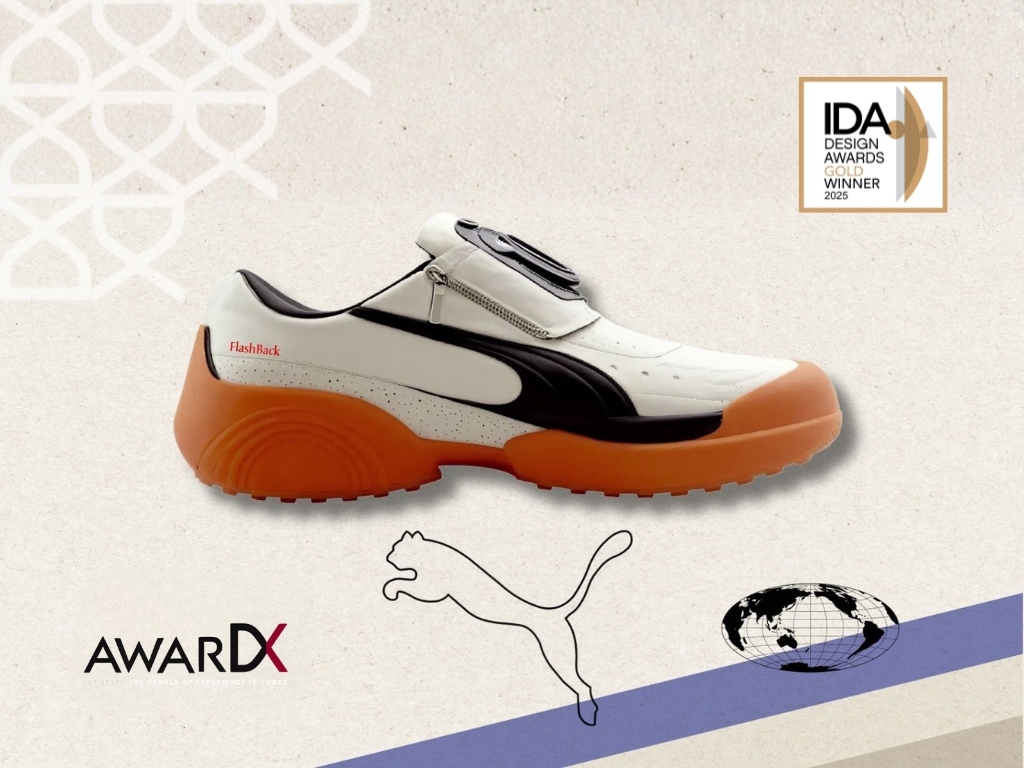
A shoe that remembers film
Flashback began as a conversation between archive dust and analogue scars: a project that mines Puma’s past camera-like textures and the tactile imperfections of film, then reimagines them as a contemporary casual sneaker. The result is a student-led collaboration that balances nostalgia and utility — a sneaker tuned to Gen-Z and millennial tastes for authenticity, imperfect surfaces and craft-forward details. The design team (Jenny Phung, Fabiana Abreu, Eugenia Galvez) developed Flashback in partnership with Puma and the Savannah College of Art and Design, and the work won Gold in the International Design Awards for Footwear / Casual Footwear.
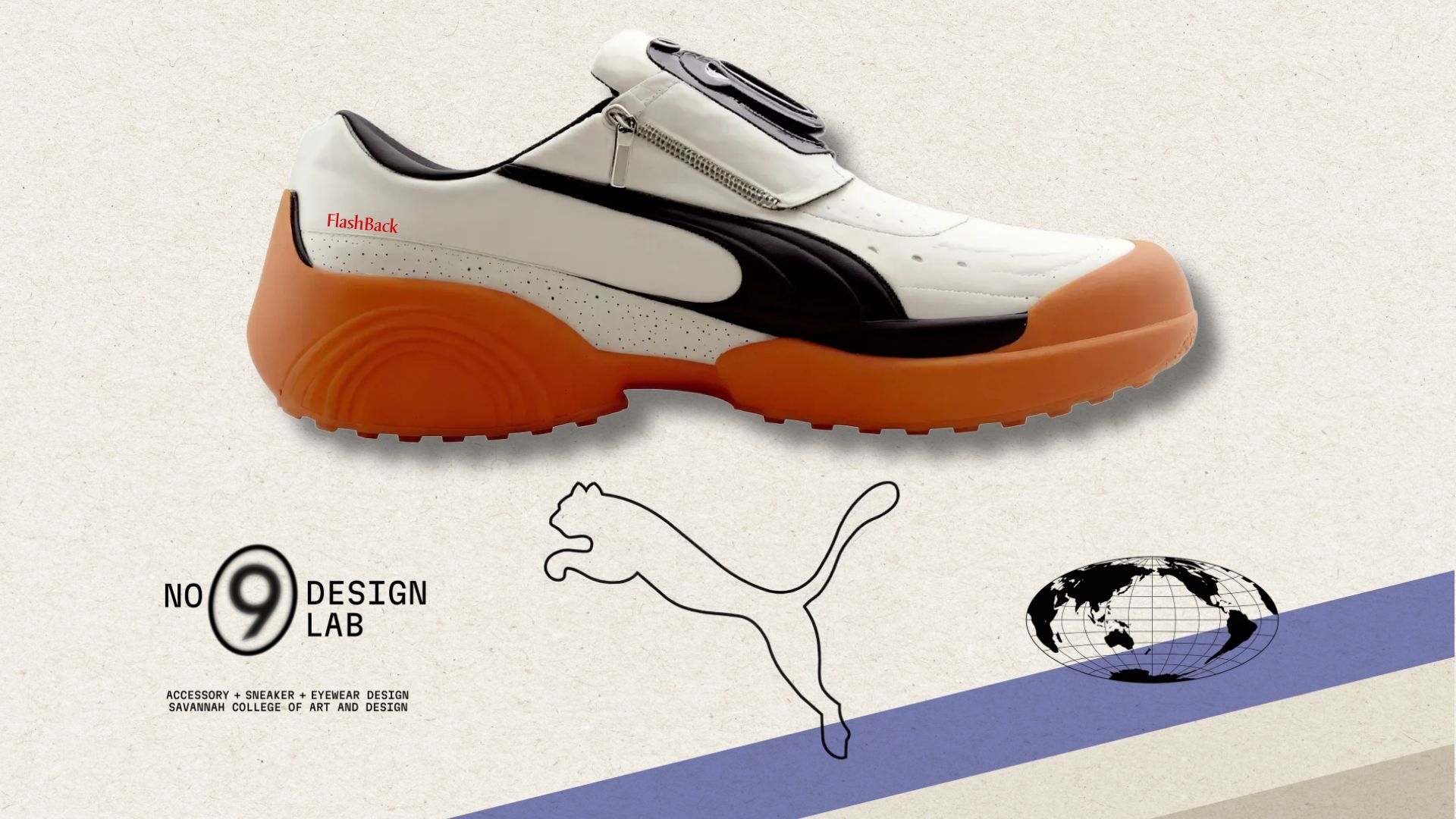
Product snapshot — what Flashback actually is
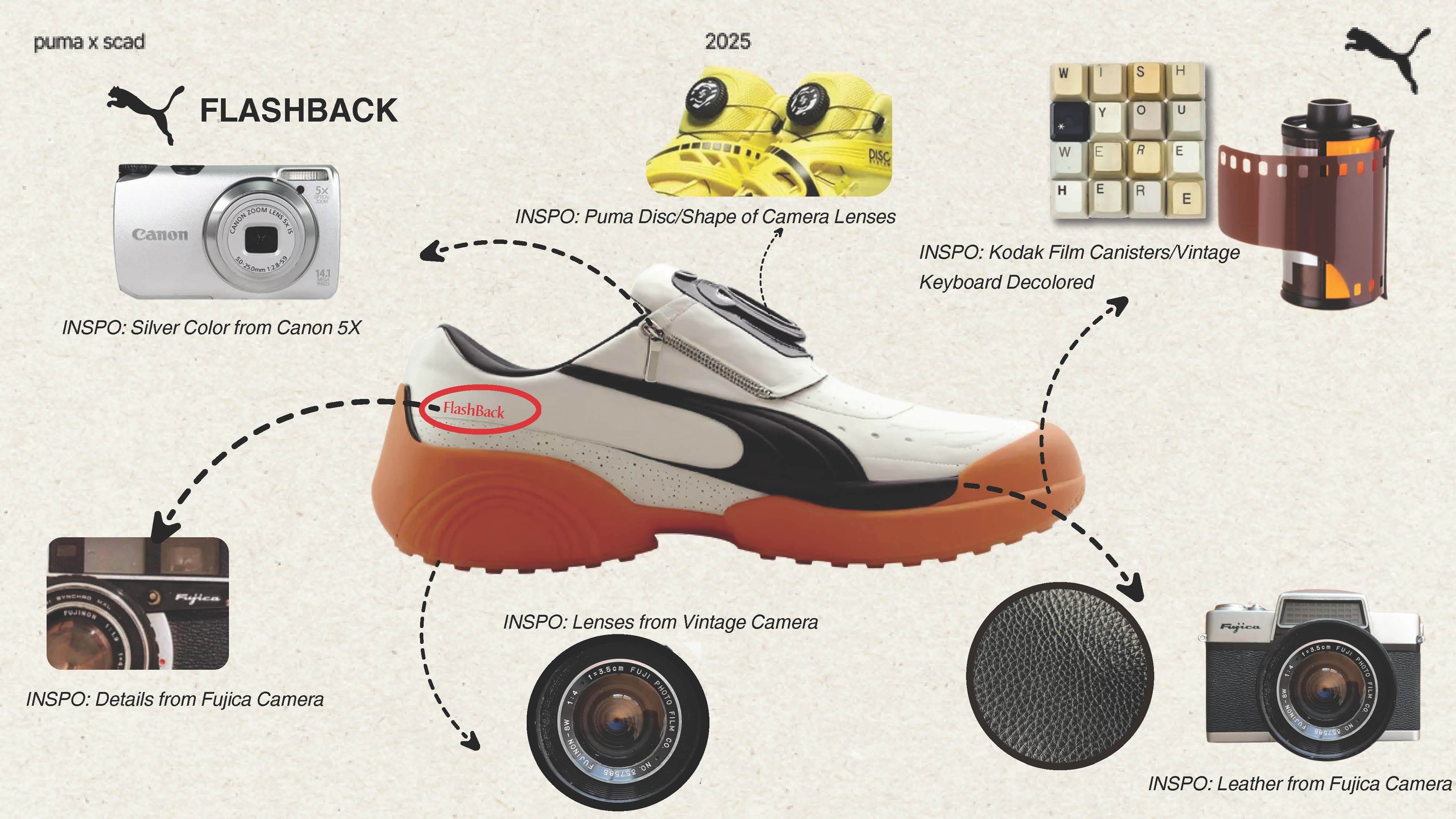
At first glance Flashback reads like a familiar silhouette: low profile, soft stack, and approachable proportions. Look closer and the camera references appear — grainy suede panels that feel like film emulsion, stamped leather overlays that echo camera bodies, and a tonal midsole whose micro-texture recalls Polaroid grain. Functional design choices — a cupsole for everyday comfort, a contoured last for broad feet, and neutral colorways with one accent “film frame” tone per SKU — anchor the concept in wearability. The sneaker is a study in how nostalgia can be tactile and useful rather than merely visual.
Designer mindset — translating analogue warmth into a sneaker grammar
The Flashback team started by asking: what in the analogue camera evokes feeling? It wasn’t the gadgetry so much as the accidental marks — fingerprints on lenses, sun-flares, soft matte blacks, tactile knobs and the satisfying click of a shutter. That sensibility became a set of design rules: embrace texture and imperfection, design details that invite touch, and limit bright graphics in favor of subtle material storytelling. The mindset privileges human scale and memory: materials that age nicely, surfaces that reveal use, and small gestures (stitched “frame” lines, a tongue label mimicking a film tab) that read as little stories when the shoe is handled.
Research & archive work — mining Puma’s visual memory
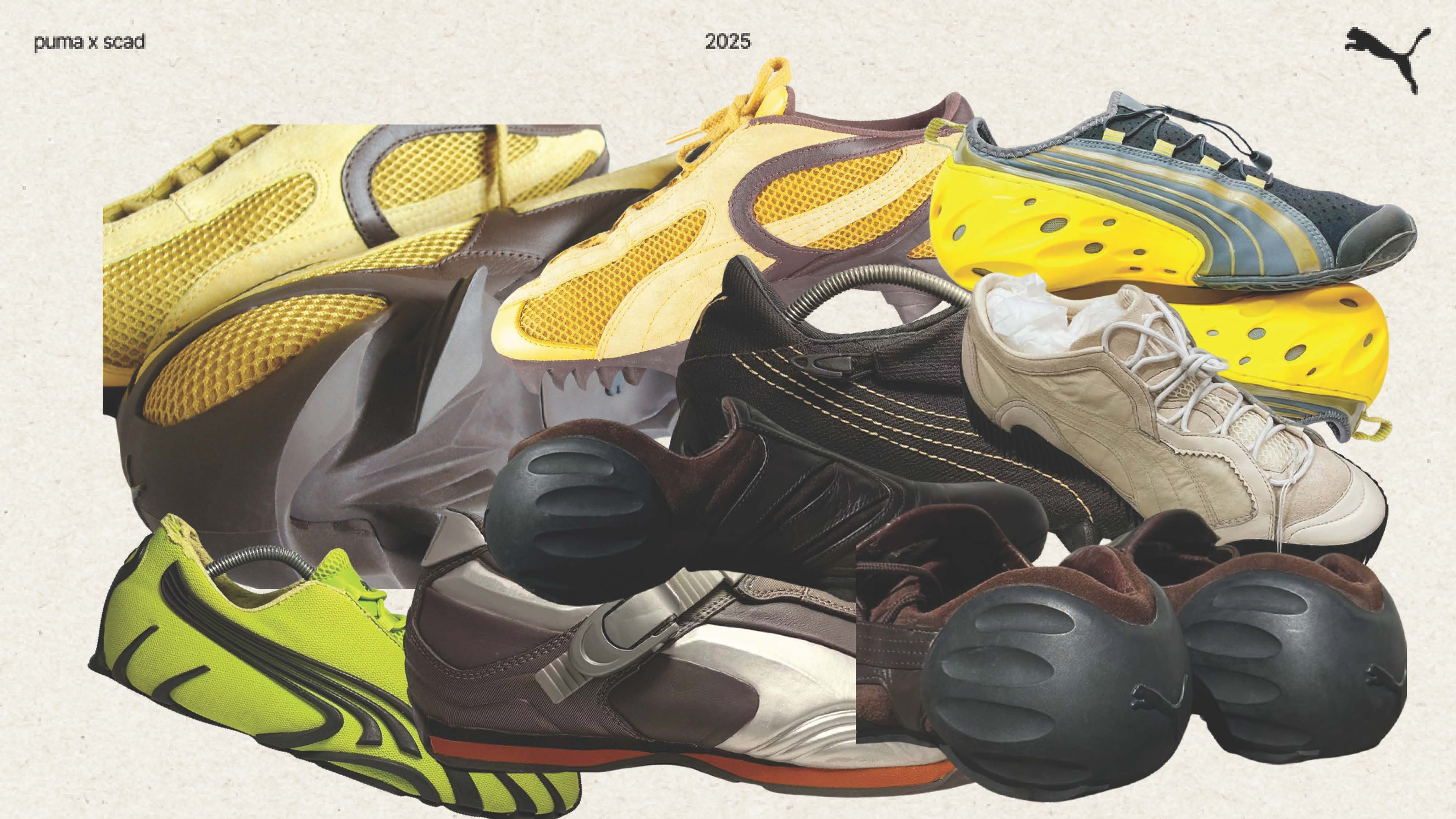
A deep archive dive grounded the concept. The team studied Puma sneakers, catalog photography, and cultural ephemera to identify recurring visual cues and manufacturing details that felt authentic. Simultaneously, market research mapped where younger consumers were gravitating — toward craft, tactile surfaces, and symbols of analogue cool. This dual research stage produced a refined brief: make a shoe that performs like a modern casual, but looks like a found object from someone’s shoebox of memories.
Material choices — texture as narrative
Materials do the heavy narrative lifting on Flashback. Grainy nubuck and roasted suede give the upper its “film-grain” feel; slightly nap-varied leathers mimic the tonal range of old camera bodies. Micro-perforations and subtle laser-etched patterns act like a photographer’s dust and scratches without compromising durability. The midsole uses a textured rubber compound that both resists wear and reads visually like film grain; the outsole pattern subtly references a camera aperture geometry to tie visual concept to real performance. These choices balance storytelling with manufacturing realism — everything had to be producible at scale by a global brand partner.
Concept-to-prototype — iterative craft at shoe scale
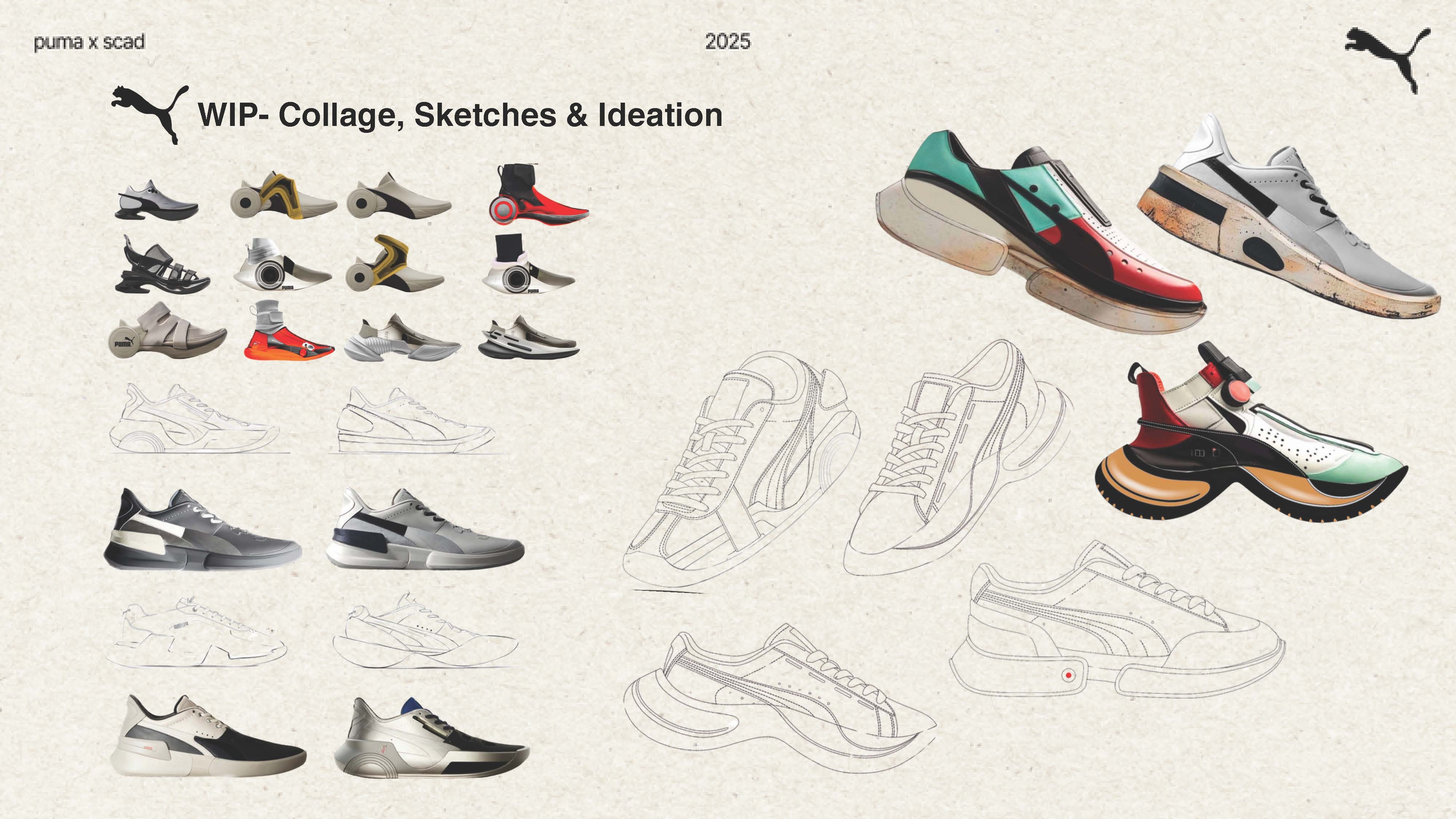
The team followed a classic, disciplined loop: sketch → last & upper mock → material test → fit prototype → wear test → tooling-ready sample. Early mockups experimented with distressed finishing and “analog washes” (controlled scuff and patina treatments) to see how surfaces evolved with use. Fit trials ensured the camera-inspired overlays didn’t produce pressure points. Wear testing focused on flexibility, break-in behavior, and abrasion — vital for a shoe meant to look like it ages well. Each failure taught a small rule: soften a stitch line here, back off a pigment wash there, thicken a toe cap to avoid premature wear.
Detail design — small moves that read loud
Flashback’s character lives in the details. The tongue tag is scaled like a film tab and stitched to give a layered, physical read. Lace aglets carry tiny engraved frame lines; heel pull tabs are made from textured webbing that mirrors old camera straps. Inside, a printed insole references an index of “exposures” — playful copy that ties the sneaker to photographic ritual. None of these moves are gimmicks: each serves ergonomics or storytelling (or both). The design respects that functional details must justify themselves beyond aesthetics.
Manufacturing & scalability — designing with Puma in mind
Collaborating with Puma demanded pragmatism. Material specs were adjusted to meet global leather suppliers’ tolerances; suede grain choices were harmonized with supplier dye processes; and aging finishes were tuned for repeatability in a factory setting. The tooling strategy favored a cupsole assembly (robust, lower cost than sewn vulcanized options for some runs) so Flashback could scale across retail channels. The team also specified replaceable insoles and standardized midsole molds to keep production costs predictable while protecting the design’s tactile intent.
Sustainability considerations — aging as a green strategy
Flashback’s “designed to age” aesthetic invites longevity: if the shoe’s surface improves with wear, owners are less likely to discard it after a season. Material decisions favored durable suedes and leathers with long life spans, and the modular insole supports repair or refresh rather than replacement. Where possible, the project explored partially recycled midsoles and chrome-free tanning options for leathers to reduce environmental impact while keeping the analogue look intact.
Audience & cultural positioning — why it lands with Gen Z and Millennials
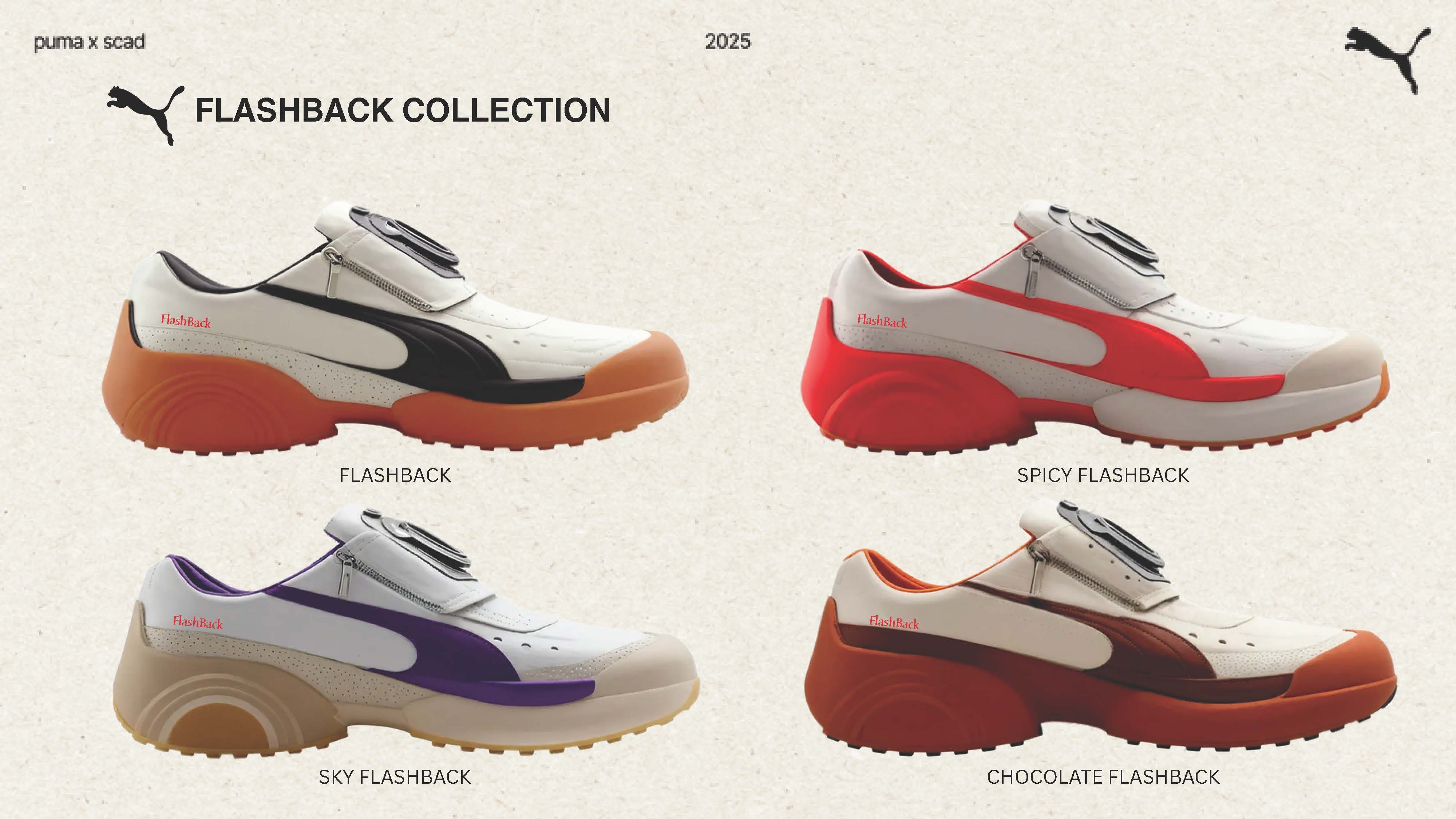
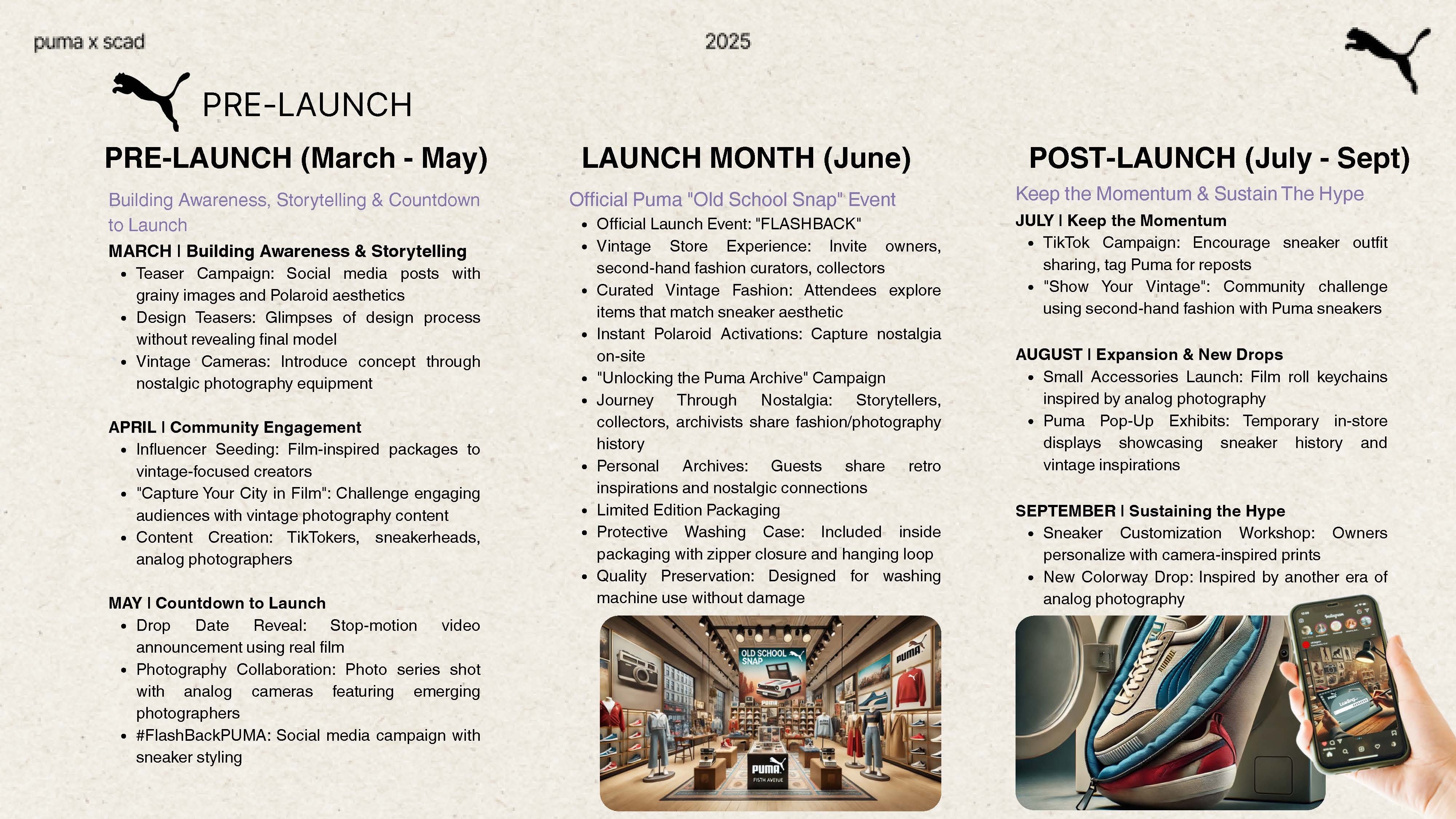
The sneaker’s resonance comes from layered authenticity: it looks curated (not mass-market), references a tactile cultural hobby (film photography), and offers approachable comfort. For younger consumers who prize “things with a story,” Flashback functions as a wearable memory. Limited colorways, capsule drops, and a launch tied to photographer collaborations (lookbooks shot on film, pop-up darkroom events) amplify cultural credibility and create shared rituals around the product launch.
Awards and validation — IDA Gold recognition
Flashback’s Gold in the International Design Awards (Footwear / Casual Footwear) validates the project’s ability to marry cultural insight with detailed execution. Awards like IDA signal to industry partners — retailers, licensors, and collaborators — that a concept has both creative depth and production maturity. For student teams, the award also opens doors to mentorship and commercial conversations that accelerate real-world impact.
Design lessons — takeaways for studios and students
Use archives to set constraints: past artifacts give rules that make design choices coherent.
Let material aging be a feature, not a problem—design finishes that reward use.
Prototype early with real materials (film, in this case, inspired surface tests).
Plan manufacture with partners from day one to avoid impossible details.
Make small, repeatable details tell the story — they scale into the whole product’s voice.
Official links for further reading:
https://www.idesignawards.com/winners/zoom.php?eid=9-64245-25
https://www.instagram.com/fabyabreusuarez/?hl=en
https://www.scad.edu/ (Savannah College of Art and Design)