


light above a sewing table
Above a sewing table, where shadows made every stitch a guess, Fablight was born. Poor, uneven light warped colour, ruined cuts and drained the morale of workshop floors — places that should hum with craft instead felt dim and punitive. Fablight answers that moment: a lighting system designed specifically to restore accuracy, comfort and dignity to makers’ work. Its story is equal parts empathy and engineering, and its result — Gold in the International Design Awards (Workplace & Office / Office Lighting Products) — is proof that small, focused interventions can change how people feel and perform at work.
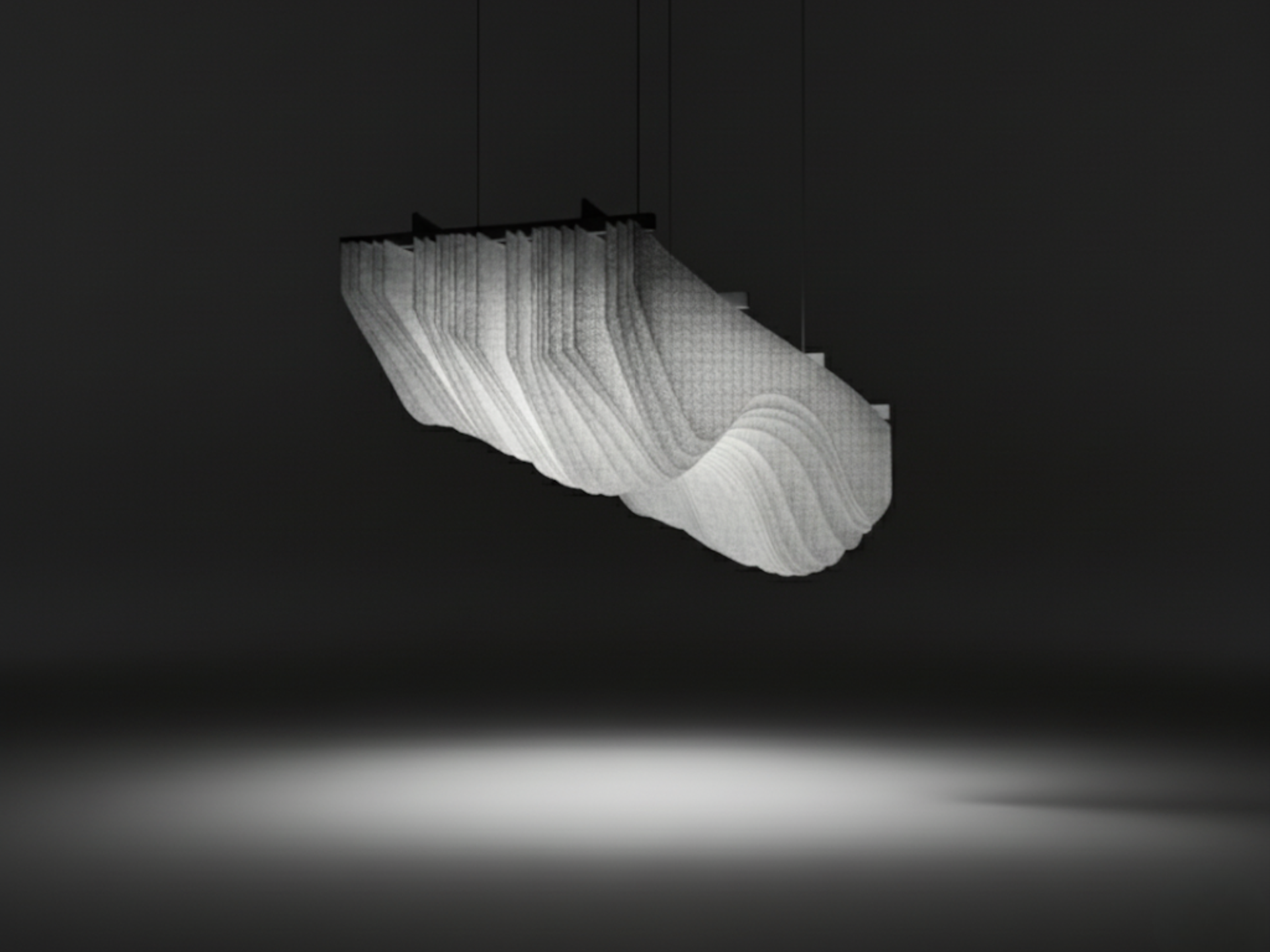
What Fablight is — concept and product snapshot
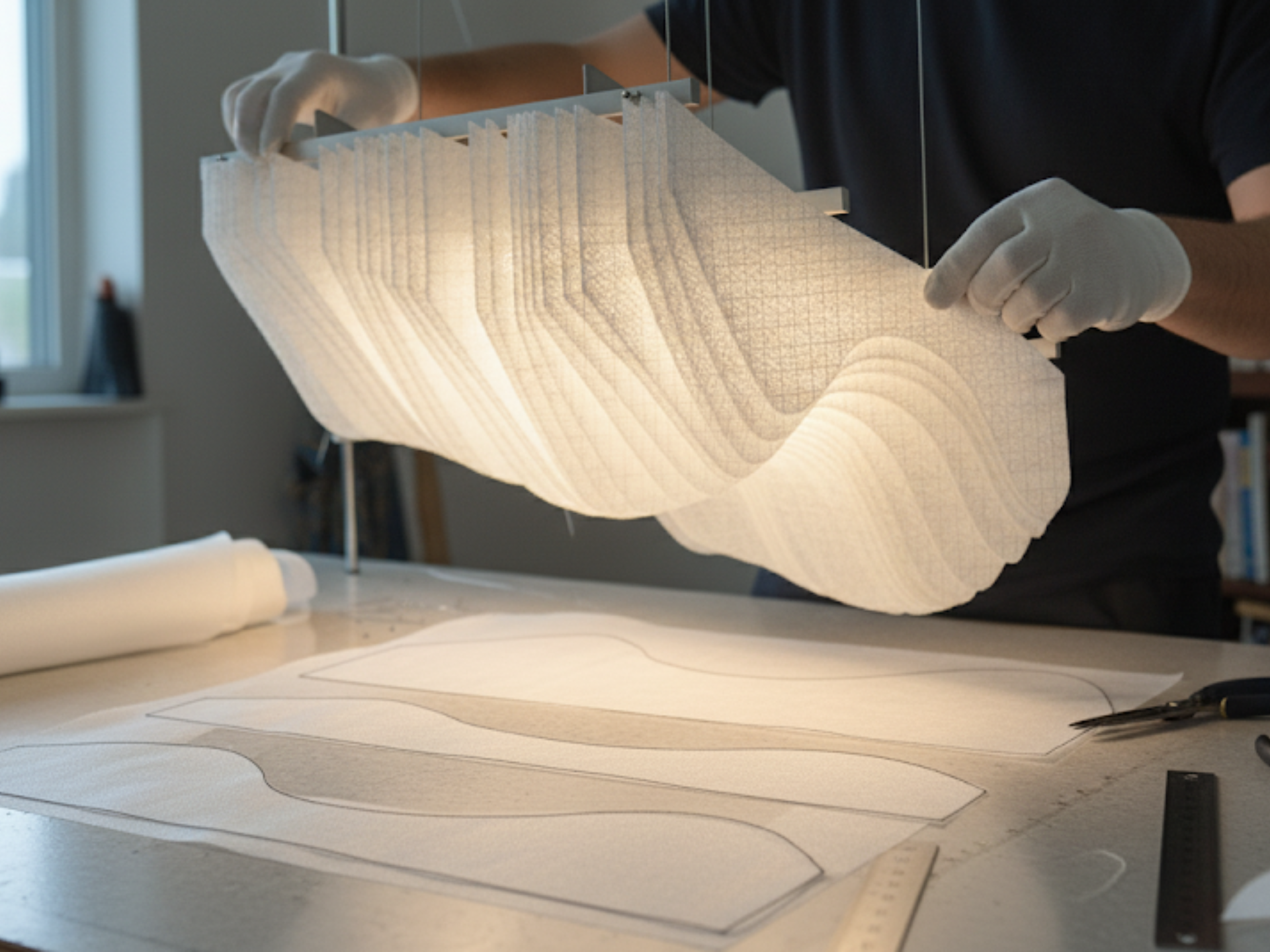
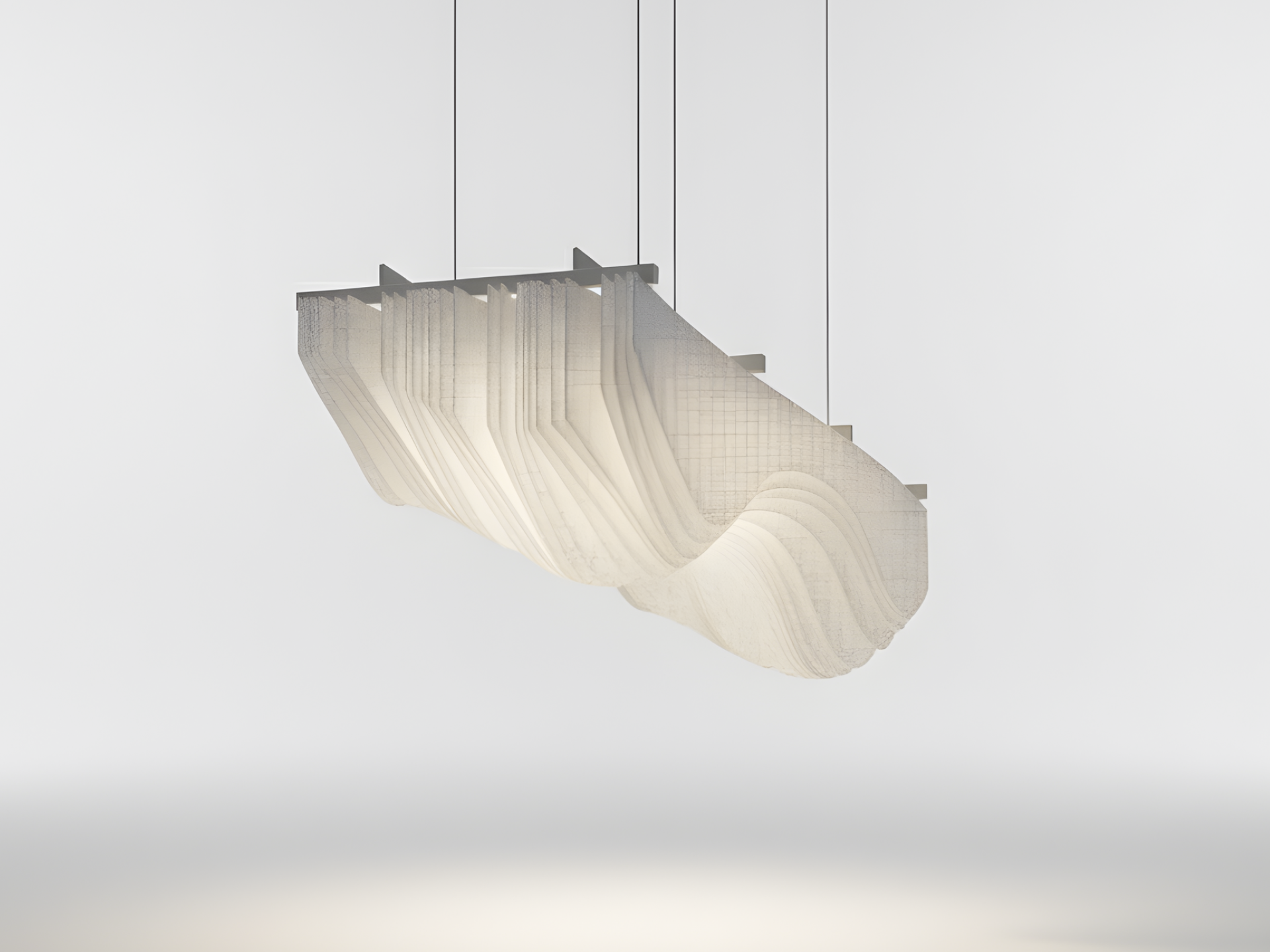
Fablight is a modular lighting system built from fiberglass panels that use the workshop’s own fabric as a transmission and diffusion medium. The panels are lightweight, thermally resilient, durable and recyclable; they diffuse light evenly across a table surface, removing harsh glare and sculpted shadows so that stitches, colours and edges are read correctly. The system is task-first — designed to improve visual accuracy and reduce eye fatigue — while also uplifting workshop atmospheres so they feel less like a factory cell and more like a creative studio.
Designer mindset — empathy driving design rules
Mohammad Javad Hakimi (with lead co-designer Amirhossein Abdollahi) began not with form but with felt experience. The brief was essentially human: how to make the workbench a place where sight is honoured, not punished. From that empathy came a few non-negotiables that shaped every decision: evenness of illumination, low glare, accurate color rendering, thermal safety for fabrics and fixtures, modularity for varied workstations, and materials that balance performance with recyclability. The mindset treats constraints (flickering lamps, heat, fragile fabrics) as a creative framework rather than a nuisance — design through necessity.
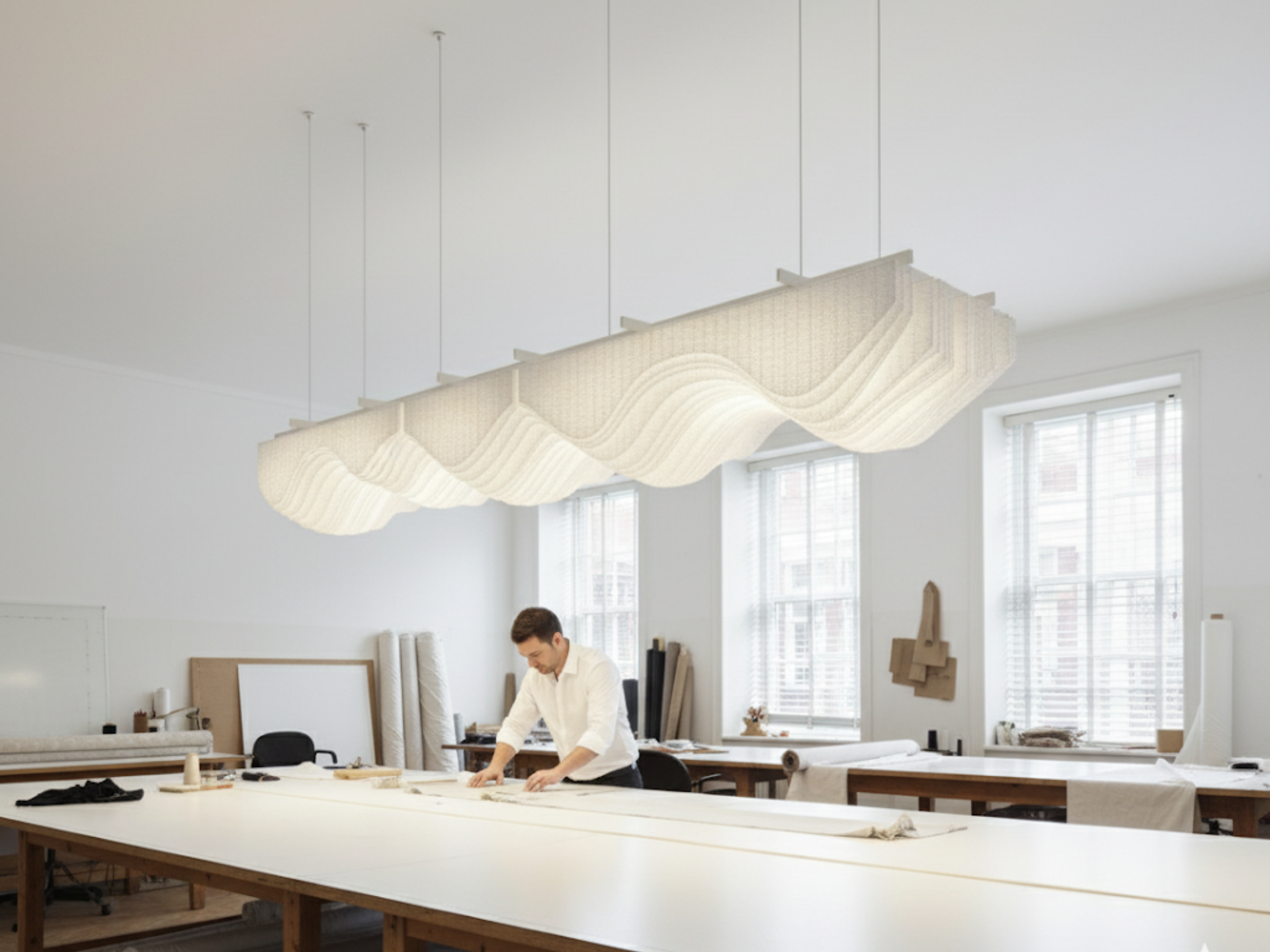
Inspiration and the material move — why fiberglass and fabric
The elegant pivot in Fablight is simple and poetic: use the very fabric artisans work with as part of the light-transmission system. Fiberglass panels were chosen because they transmit and diffuse light beautifully while resisting heat and wear. When combined with local textile layers (the workshop’s own fabric), the panels create a warm, familiar glow that reads colour faithfully and softens hard shadows. The choice also carries symbolic weight: the materials of making become participants in the making process — light filtered through cloth that was cut and sewn in the same room.
From brief to prototype — the development journey
The development path for Fablight follows a disciplined iterative loop:
Field research: long visits to sewing workshops to watch real workflows. Observers recorded where hands rest, where threads gloss in the light, and how stitches vanish into shadow. This grounded the brief in measurable visual problems (contrast ratios, shadow fall, typical task heights).
Low-fidelity experiments: small test rigs with different light sources and fabric layers showed how fabric weave, density and colour alter diffusion and colour temperature. These cheap tests quickly ruled out combinations that either flattened texture or introduced colour shifts.
Material trials: guided by earlier tests, fiberglass panels of varying thickness and surface finishes were manufactured and paired with workshop textiles to quantify transmission, diffusion and thermal properties. Performance testing measured lumen transmission, ΔE colour shift and surface temperatures under typical LED loads.
Optical tuning: designers worked with lighting engineers to position LEDs, choose lumen output, and specify diffuser cavities so the system produced task-level lux without glare (low Unified Glare Rating). The internal geometry was tuned so panels present an even luminance field to the worker’s eye.
Full-scale mockups and user trials: prototypes were installed over real sewing tables during normal shifts. Artisans used the fixtures while completing normal jobs; their feedback shaped angle, panel spacing and modular layout. Observed outcomes included fewer stitching errors, lower subjective eye strain, and improved morale.
Production validation: tooling and panel fabrication methods were specified to ensure the same optical behaviour across batches, with attention to recyclability and safe end-of-life handling.
This loop — observe, prototype, measure, test with users — kept Fablight grounded in real improvement rather than speculative aesthetics.
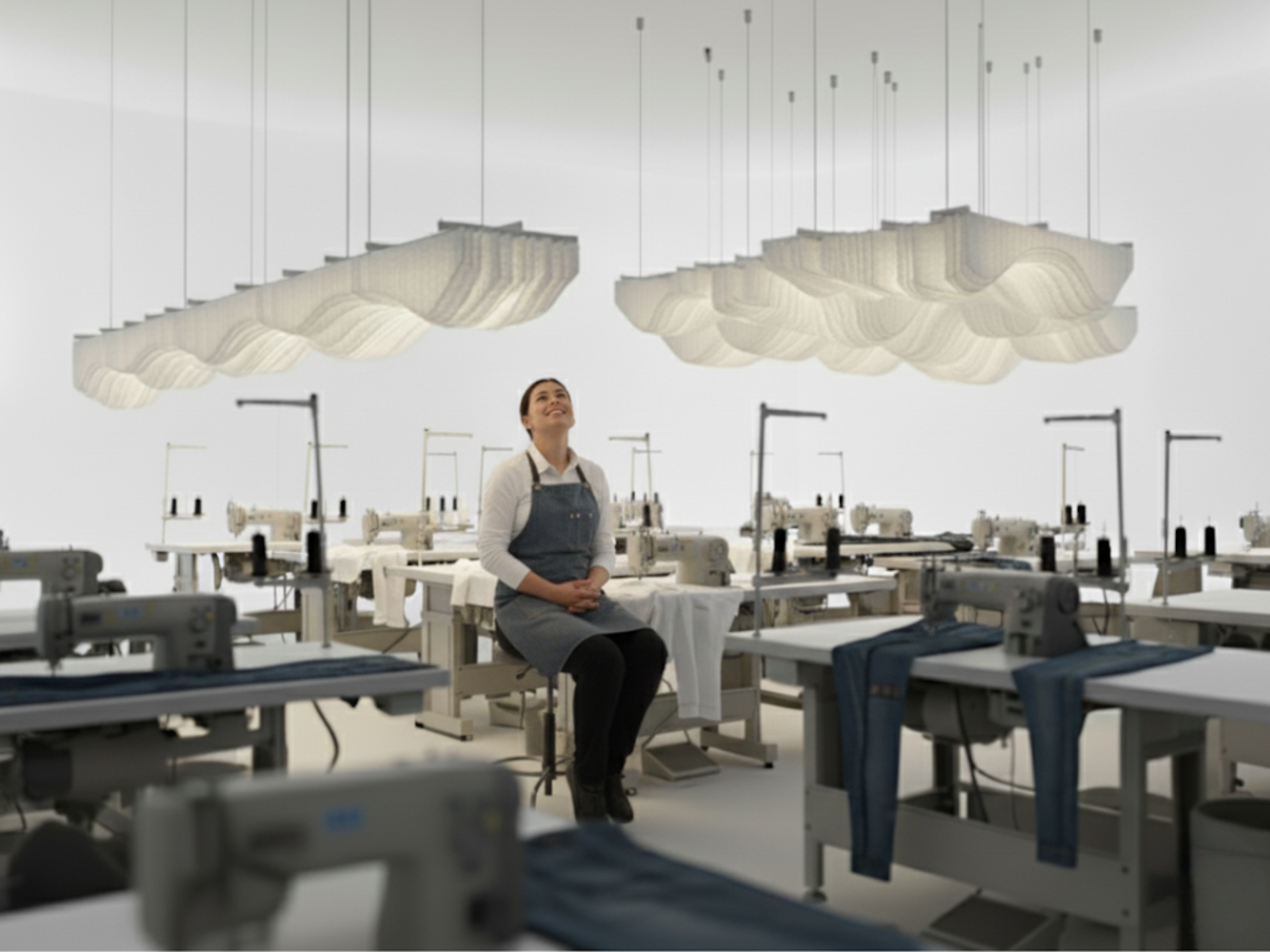
Optical & technical design — how Fablight makes good light
Fablight’s “how” is as important as its “what.” Key technical elements include:
Diffusion strategy: fiberglass panels with tuned translucency control the spatial distribution of light, producing wide, even fields rather than hotspots.
LED selection and color rendering: high-CRI LEDs were chosen to preserve true colours of fabric and thread — a critical requirement for textile work. Correlated color temperature (CCT) was tuned to feel natural for long sessions (balanced between warm comfort and daylight accuracy).
Thermal design: fiberglass resists heat, and LED arrays are coupled with heat sinks and ventilated enclosures so surface temperatures remain safe near flammable textiles.
Glare control & optics: recessed LED placement and internal micro-louvering reduce direct view of the source and minimize contrast that causes eye fatigue.
Modularity: panel modules can be joined, angled, or nested to match different table sizes and tasks, so small tailors and large ateliers can both be served by the same system logic.
Material, durability and sustainability
Fiberglass was chosen not only for optical performance but for robustness: it resists humidity, abrasion and heat common in workshops. Hakimi’s specification also emphasises recyclability — panels are designed to be recoverable and reprocessed where facilities exist. Lightweight construction means lower material use and easier installation; replaceable LED boards and driver modules extend service life and reduce whole-unit replacement. The result is a product that supports circular thinking without compromising performance.
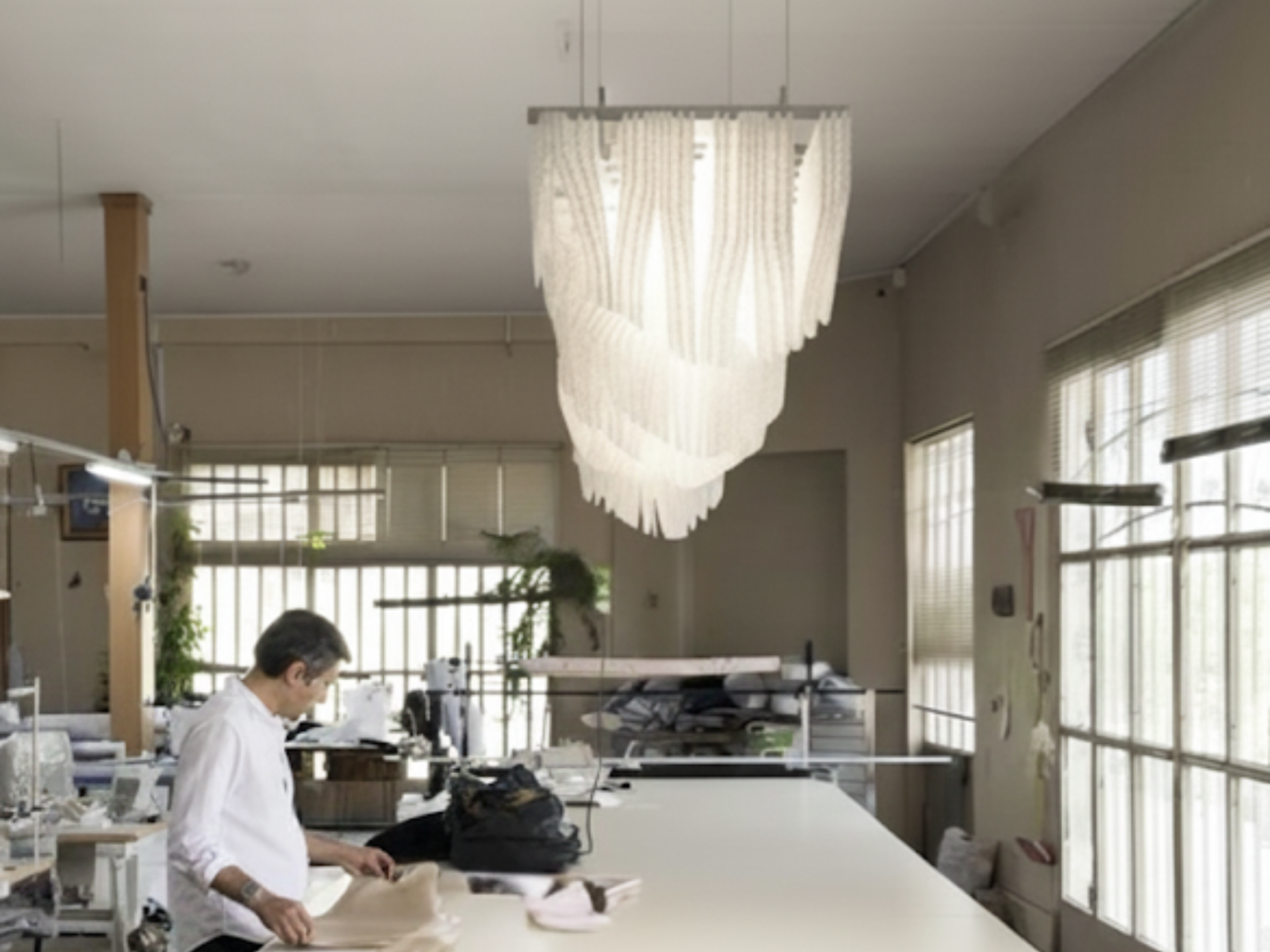
Ergonomics & human factors — comfort matters
Lighting is bodily. Fablight reduces eye strain by lowering contrast levels and stabilising luminance across the desktop: threads and stitch lines no longer hide in deep shadow or explode in glare. The modular layout lets technicians place modules to match habitual posture and task zones: cutting areas need broader, flatter light; sewing heads benefit from more direct, close-range illumination. User testing showed artisans completed visual tasks more confidently and reported less effort after a shift under Fablight.
Manufacturing and installation — making it real at scale
Design for manufacture shaped the system’s final form: panels are sized to fit common workshop table dimensions so that multiple manufacturing partners can produce consistent parts. Mounting hardware was simplified — clamp and plug systems allow retrofits to existing rigs — and the electrical system was made compatible with common driver standards to simplify certification and maintenance. The installation model supports phased upgrades: ateliers can replace only the sections that need the most attention, lowering up-front costs.
Awards, recognition and impact
Fablight’s Gold at the International Design Awards in the Workplace & Office / Office Lighting Products category recognised its combination of human-centred problem solving and robust execution. The award underlines that the design community values solutions that produce measurable, worker-focused benefits — not only spectacle. More important than the trophy, though, are the workshop reports: fewer reworks, fewer colour mistakes, and clearer morale — small outcomes with big cumulative value for craft communities.
Why Fablight matters beyond a single product
Fablight is a model for applied empathy in industrial design. It shows how observing real work — and privileging those observations over stylistic impulse — produces products that improve daily life. By making the workshop a better place to see, the design also preserves cultural skills and livelihoods: when artisans can work without strain, the craft survives and thrives.
Design lessons — what other teams can learn
Design from observation. Spend more time watching people work than arguing over aesthetics.
Prototype with the real product. Use actual fabric, thread and tools in tests.
Optimize for service life. Replaceable modules and standard drivers reduce waste and installation friction.
Balance poetry and pragmatism. A poetic material move (light through cloth) must be underpinned by measurements and safety.
Measure impact. Track accuracy gains or error reductions to make the business case for adoption.
Official links for further reading:
https://www.idesignawards.com/winners/zoom.php?eid=9-65302-25
https://www.instagram.com/mjavadhakimi?igsh=MWdoenkxcDd1d3Yxcg==
https://www.instagram.com/javadhkim?igsh=MXB6cHllZ3J3bTIwZA==
https://www.instagram.com/awardxstudio?igsh=ZmpkbzJ0NzlkdWZ4